• Culturally Responsive Teaching

    This video of my class and brief interview below were selected and published by the Massachusetts Department of Education as an example of culturally responsive teaching (CRT).

    This lesson is an important part of my Black Writers unit, in which I ask students to consider the contexts in which Black literature and art is often placed by challenging students to disrupt common narratives of suffering and oppression. Nearly all of the students in this class identify as Latinx and many also identify themselves as Black or as having African ancestry.  This lesson led to profound realizations for many of my students about their own schooling and the messages they have unconsciously internalized about Black history and culture. It also was instrumental in laying groundwork for students to critically engage in textual analysis by providing them more equitable and historically accurate lenses through which they might consider the work of Black writers.

    What are you proud of and excited to share from this video? Why do you think this is a strong example of culturally responsive teaching?

    This lesson was designed to engage students in challenging the dominant narratives about Blackness that they learn in school and media. In order to achieve this, I reframed their own ideas and asked them to consider the proverbial lens through which we all see Black culture and history as shaped by these dominant narratives. The aims of the lesson were to give them space to identify their own internalized biases and to examine the ways white supremacy affects the stories they have been told about themselves and/or Black people.

    Describe your journey to becoming a more culturally responsive, anti-racist educator. What has helped you grow your CRT practice?

    My students themselves have been most significantly instrumental for me in shaping the way I structure the content and pedagogy in my classes. Observing and listening to their responses to my curriculum over the years has taught me that mere representation is not enough. Education should empower students, which means not only exposing them to sources of power that are culturally relevant to them, but also offering them the tools to engage critically with the corrosive sources of power in the world such as white supremacy, and even more so, the pervasive banal gestures of representation, tokenism, and historical misrepresentation.

    What are some of the most valuable resources you’ve come across to support your CRT learning journey?

    I can’t emphasize enough the importance for educators (especially white educators) to just begin anywhere. My starting point is always acknowledging that my own education did not adequately equip me to effectively teach students of color and moving forward from there. The good news is that countless brilliant thinkers, writers, historians, and artists have done so much of the work already; it’s just a matter of going out and finding it. When I wanted to create a unit focused on the ingenuity and tropes of Latin American writers, I went and read those writers’ works and the relevant scholarship. It’s all available to us but we have to be humble enough to know that the education we received won’t usually help us when it comes to disrupting narratives for our students.

  • Tales from the Chihuahuan Desert

    Gloria Anzaldúa ends the first poem in Borderlands/La Frontera, “This is her home / this thin edge of / barbwire.” This image reflects where my students live, both metaphorically and physically. They exist between spaces they did not choose or create, and they are defined by the struggle they experience as they make sense of the real and imagined borders around them. In watching them navigate this, I have realized that my role is to engage my students with the narratives that honor their Latinx identity and history. Attending the NEH Tales from the Chihuahuan Desert program will allow me to build a deeper understanding of how the Chicano experience on the border fits into the larger narrative and legacy of the Americas and find ways to convey this knowledge to my Latinx students who are hungry for their cultural birthright.

    Since, in many ways, young people exist on the “thin edges” of their world, they are naturally inclined to test the social, political, physical, and moral borders around them as they make sense of their identities and power; they are more naturally at home in the borderlands. By nature of their burgeoning sense of self and their place in society, young people are what Anzaldúa calls “the prohibited and forbidden [who] are [the] inhabitants” of the borderlands. As their teacher, I have the unique opportunity to witness as my students define and break the borders around them and to act as a guide for how they choose to live in the borderlands of their world.

    I first came to Gloria Anzaldúa a few years ago while researching for a survey unit I teach on the legacy of Latin American writers. While traveling in Colombia I heard about and saw the literary legacy of Gabriel García Márquez everywhere I turned. As a white man and English teacher who grew up in the U.S. education system, I was personally struck by a literary tradition that had little resemblance to the one I knew. Moreover, I thought of my students and the literary traditions they left behind when they moved from their home countries to the United States.

    For the past six years, I have taught eighth grade English at a public middle school in Lawrence, Massachusetts. All of my students identify as Latinx or Hispanic; most have Dominican or Puerto Rican heritage, and nearly all of them were born outside of the United States. Although the prevailing ideas about English curriculum in the U.S. education system are still largely rooted in antiquated assimilationist-era or neo-colonial ideas about “the canon,” my time in Colombia helped me recognize that I have an ethical responsibility as a teacher of bilingual Latinx students to share with them their literary and artistic birthright.

    While I had always included many writers and protagonists of color in my curriculum, I realized that representation is not enough. My students from Dominican Republic, Puerto Rico, Colombia, Ecuador, Guatemala, and El Salvador had rarely been exposed to the rich literary legacy of their homelands or of their people. Furthermore, as first-generation students in the U.S. school system, they have little chance of encountering this heritage. Alvarez, Neruda, Martí, Medina, Cortázar, Piñera, Thomas, Asturias, Esquivel, Ortiz Cofer, Anzaldúa, and García Márquez simply are not taught, and most bafflingly, might be considered too advanced for language learners and students reading below grade level; nearly all of my students fit into one or both of these categories. And yet, when I went to work assembling this curriculum – this head-first dive into my students’ own ancestral literary history – the texts brought my students to life. Suddenly they saw in these narratives their own struggles and passions held up like a mirror in front of them. They were devouring texts written three or four grades above their reading levels.

    While I acted as their literary guide through the richness of the language and technique of the writers, my students were my cultural interpreters, describing how Victor Hernández Cruz perfectly captures the cognitive dissonance of bilingualism in his chaotic poem, Lunequisticos, or how they viscerally feel the historical and contemporary “paradox of brownness” Richard Rodriguez describes in Brown: The Last Discovery of America. They hotly debate Rodolfo Gonzáles’ I Am Joaquín amongst each other: how can he be Joaquín and Cuauhtémoc and Cortes? And they extend this question to themselves: how can I be Spanish and Taíno and African, the conqueror and the conquered? How can I exist in this borderland between my identities?

    Although notably, few of the students in my school have known Mexican or Chicano ancestry, the symbol of the border has become a central image for my students as they make sense of all Latin American writing. They also viscerally feel as if they are caught up in the national dialogue about the U.S.-Mexican border; while most of them are unabashedly proud of their Dominican identity, they all share the experience of being seen as brown-skinned and heard as Spanish-speaking, and many people they encounter in the U.S. assume these equate to Mexican. So my students are curious not only about the symbolism of borderlands, which they feel intuitively in their own way, but the plight of the people who live in the real borderlands, with whom they are frequently conflated. Since the context of Chicano culture is relatively distant for both my students and me, expanding my understanding by immersing myself in the narratives and customs of its people would have a profound impact on my classroom and my ability to make the borderlands and Chicano history a more salient aspect of Latinx identity for my students.

    Deepening my own knowledge about this region, the people who experience the borderlands, and the culture and art that springs from it will allow me to better guide my students’ curiosity about their shared mestizo and trigueño experience and history. While I have done a fair amount of learning about Latin American writers and hope to contextualize the work I would do at the NEH institute within the broader field of Latin American literature, the reality is most of what I know on this topic is self-taught. As much as I have learned on my own, the opportunity to engage with issues of Latinx identity, binationalism, and bilingualism in an academic setting with leaders in the field – particularly those whose lived experiences as Latinx people have shaped their thinking – would help bring greater coherence to my curriculum and confidence to my instruction. I am particularly excited about the broad variety of opportunities to learn from so many different experts as well as the chance to do so in a group of similarly minded teachers, with whom I hope to discuss, debate, and share. I have found that my most rewarding professional experiences come when I have the opportunity to participate in an intellectual experience with others who are learning alongside me. I place a high premium on cultivating relationships with others to the end that we may mutually benefit from deep intellectual connections and shared trust. If I were selected to participate in the Tales from the Chihuahuan Desert program, I would be bringing 14 years of experience in an English classroom and at least an introductory context for examining the narratives, cultural artifacts, and landmarks presented in the program.

    The deeper I am able to immerse myself in this field of study, the more effectively I will be able to teach from a place of understanding and empathy. While I will never fully experience the world in the way my students do, ultimately, as best as I am able to, I want to see and feel “this thin edge of barbwire” so that I can better comprehend the lived experiences of my students who make their own homes in the borderlands of the world around them.

  • IMG_3999

    “Nature is not a place to visit. It is home.” -Gary Snyder

  • “Diminished” & “Amplified” by the National Parks

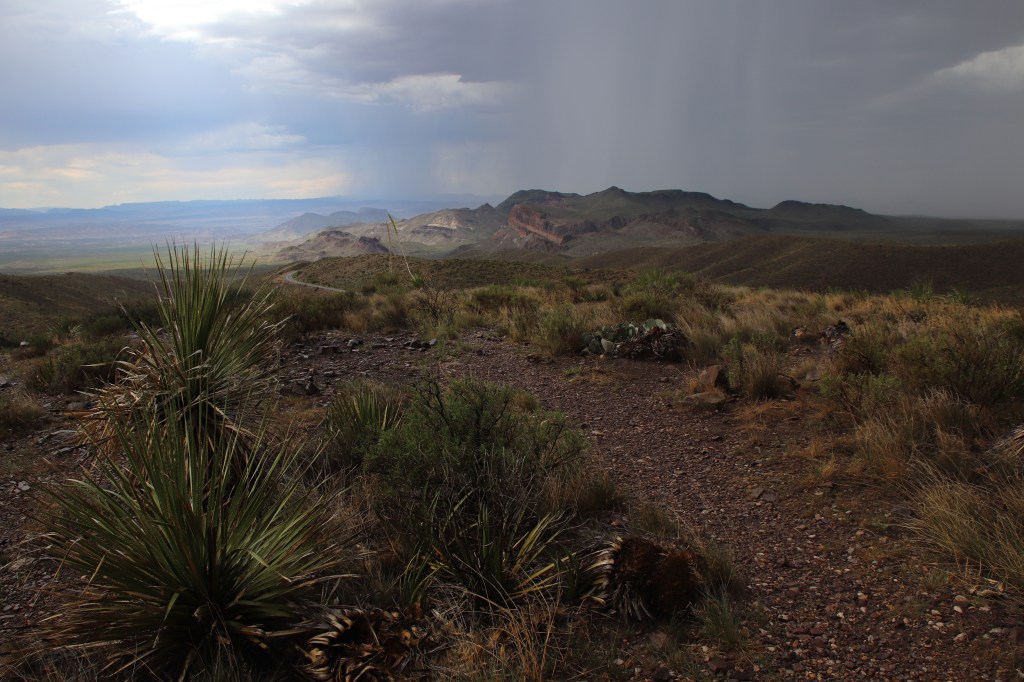
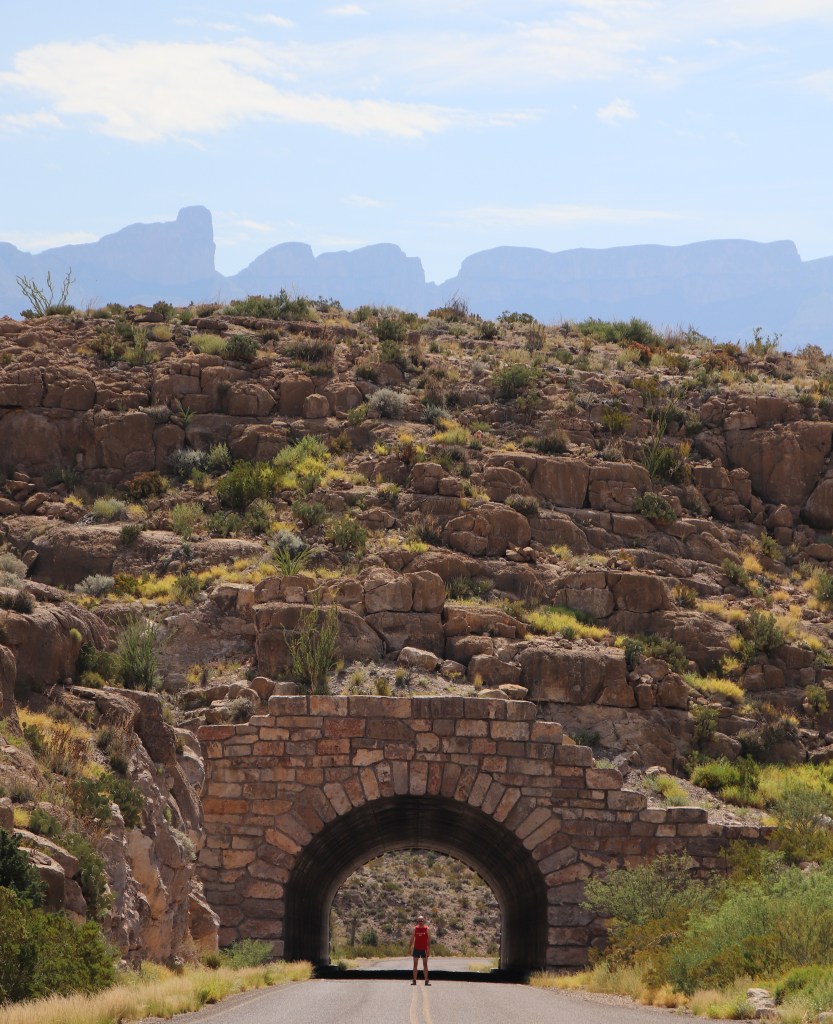
    Road tripping to National Parks has become a summer tradition since I’ve been teaching. This year my plans are bringing me to Texas for a two-week program at UTEP through the National Endowment for the Humanities. Rather than make two separate trips, I appended a week-long trip through the state, flying into Dallas and logging nearly 1,600 miles as I zig-zagged between cities, parks, and small towns across Texas and New Mexico on my way to El Paso. While Texas is not known for having the most popular National Parks, I found them to be utterly compelling.

    On the six and a half hour drive from Austin to Big Bend National Park I spent a good amount of time listening to the audiobook version of The National Parks: America’s Best Idea, by Duncan Dayton and Ken Burns (of the PBS documentary series). Earlier in the drive, I was most struck by an interview with Shelton Johnson, the superintendent of Yosemite and a life-long park ranger:

    “When you’re in a grove of giant sequoia, there’s no need for someone to remind you that there is something in this world that is larger than you are because you can see it. There’s no need to stand on airs and think that you’re better than this person or not as good as that person because we’re all diminished and at the same time amplified by being in their presence.”

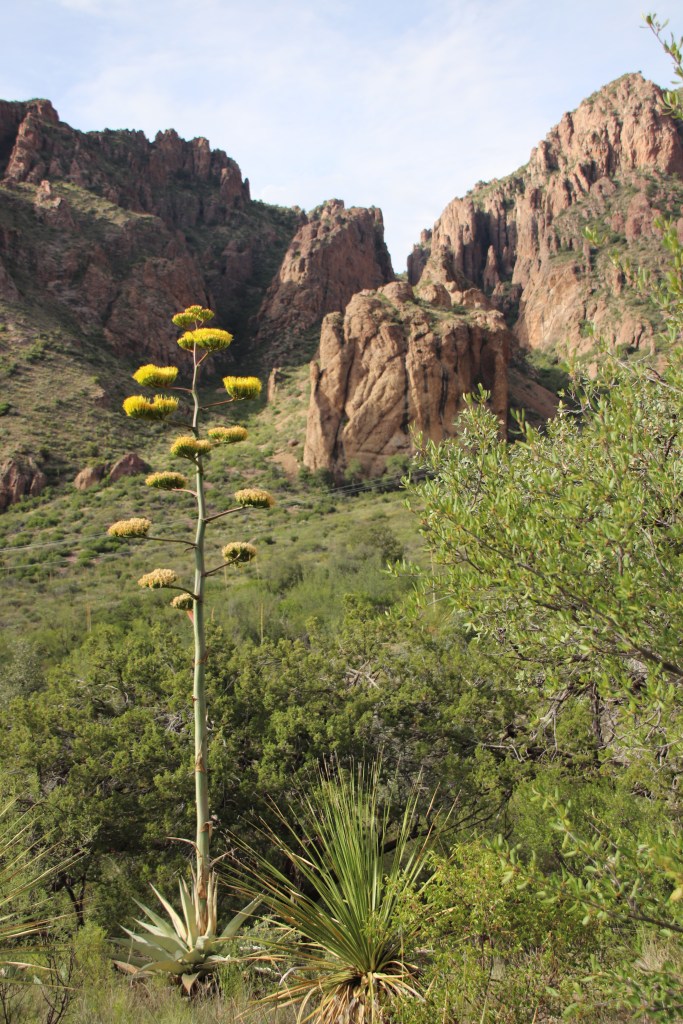
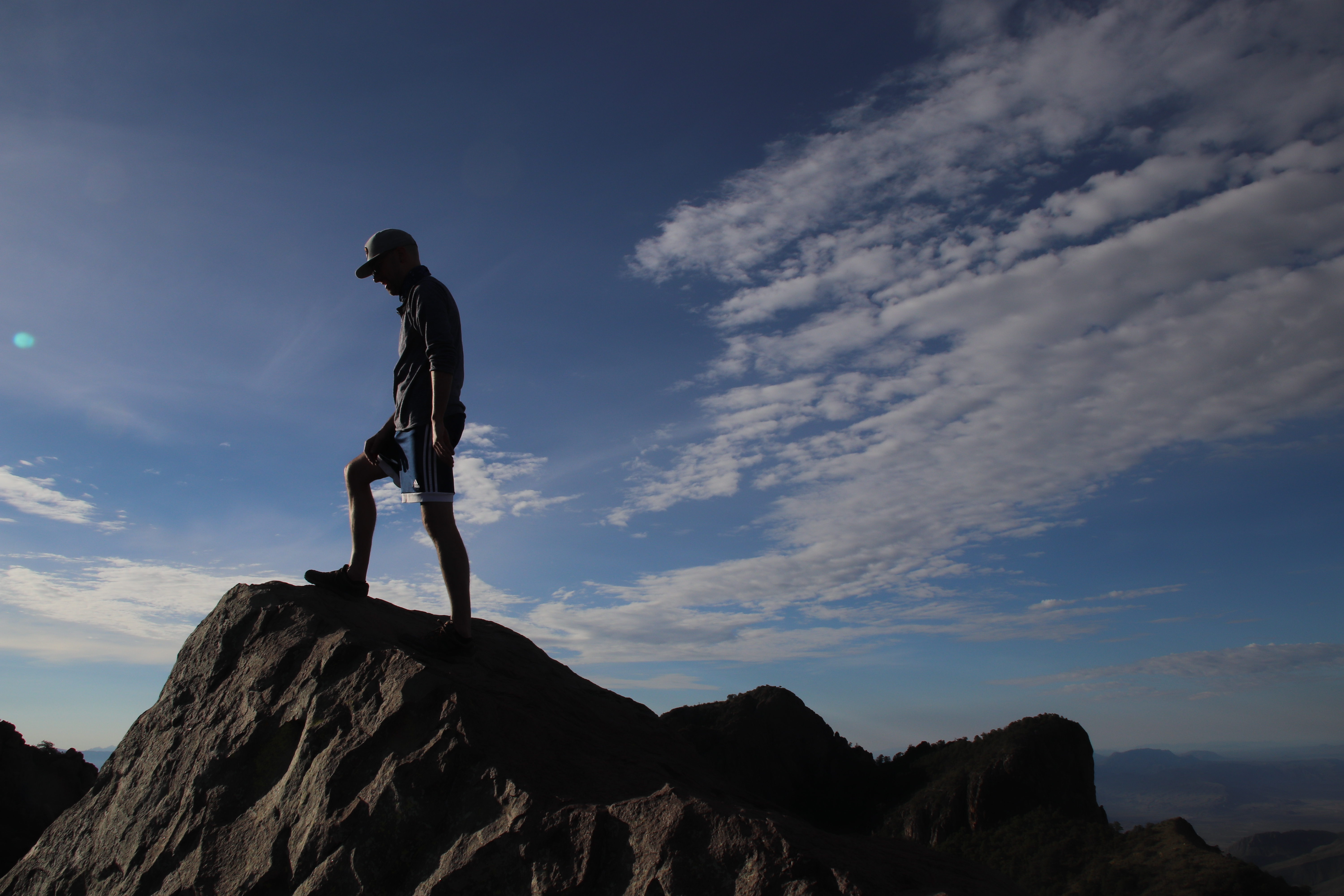
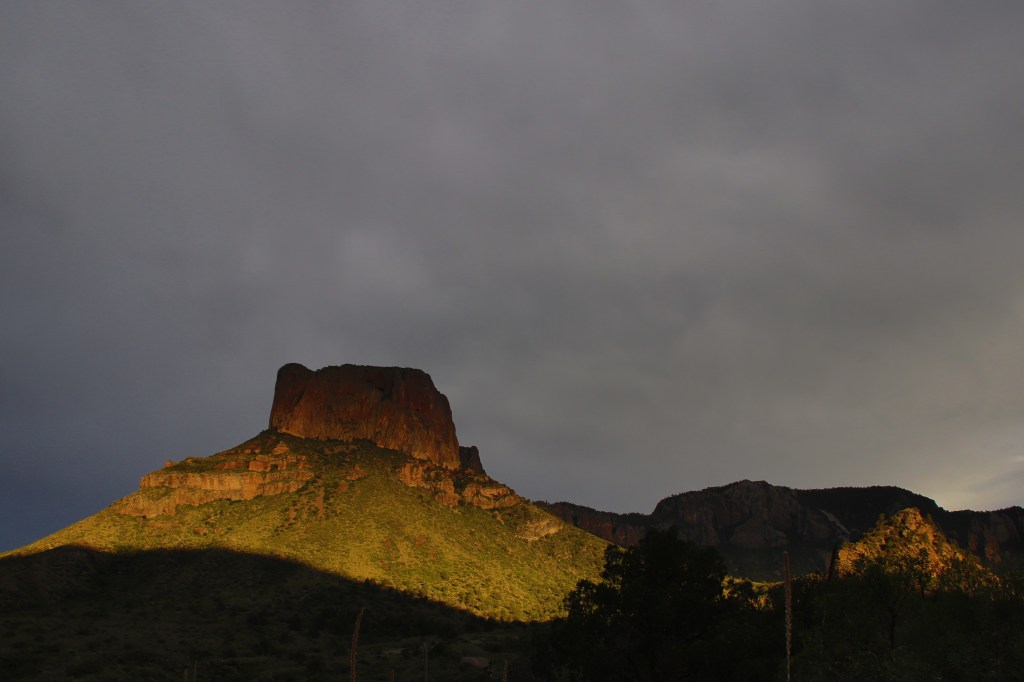
    Those two words – diminished and amplified – rattled around in my mind the whole drive and when I finally entered Big Bend and began the ascent up the Chisos Mountains I was overcome by how diminished and amplified I felt. The soft brown of the craggy rock mountain faces had a subtle green lushness that was nothing I had expected nor anything I had seen before. The road up the basin passes through a broad slope covered in funky cacti each with a long stem growing from its center, like a giant stalk of wheat; upon closer inspection, it was clear these were just oversized flowers springing from the heart of the plant.

    Those mountains and the flora made me feel diminished. I felt overwhelmed by their scale and the relative temporality between these mountains and me. I was the alien in this beautiful landscape that was new and odd to me, but had existed and would continue existing without me.

    And at the same time, I felt myself being amplified by being in the presence of this beautiful landscape, ancient at its core and made anew each day and season. The relative heat of the summer meant that the park was virtually empty, which only added to my sense of a profound connection with the moment and all the mountains had to offer.

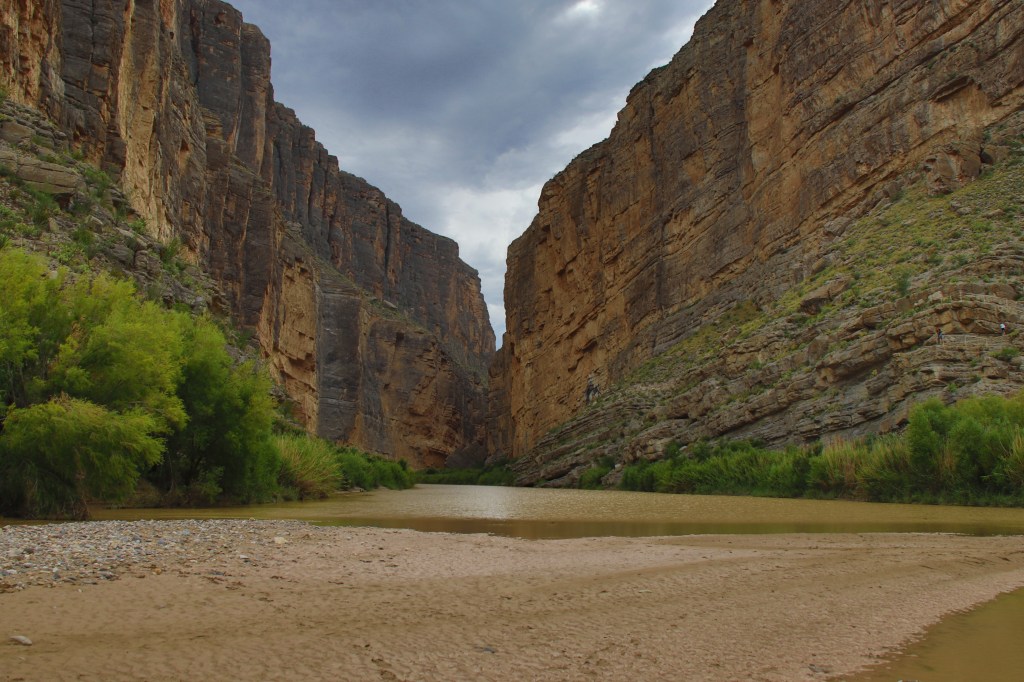
    From the Chisos to their rugged desert surroundings and the cloudy Rio Grande, I had an abiding feeling of being diminished and simultaneously amplified.

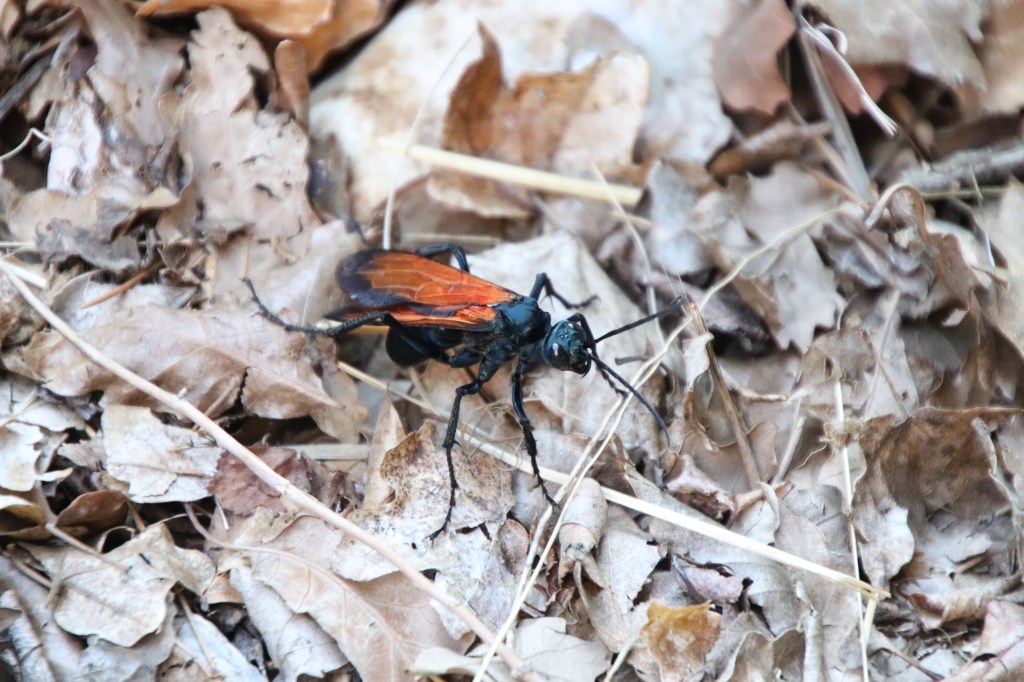
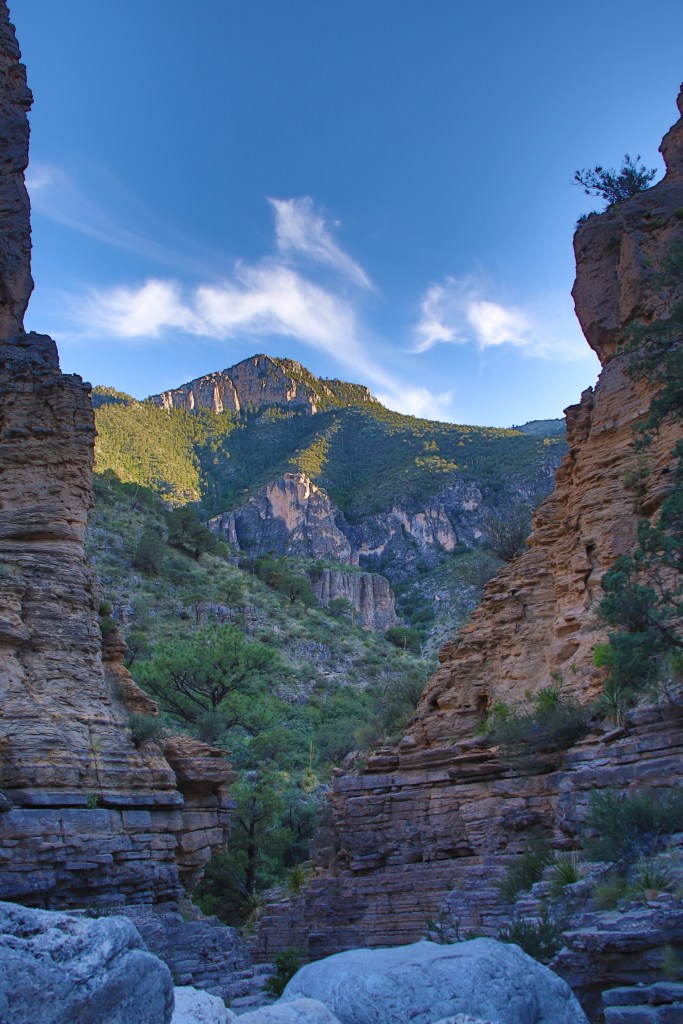
    And this did not change when I drove north to the Guadalupe Mountains National Park. I saw their peak on the horizon more than 50 miles before I arrived at the park. I nearly stepped over a patient tarantula on an evening hike in the park and found narrow canyons illuminated by the setting sun that betrayed their ancient history in the rock.

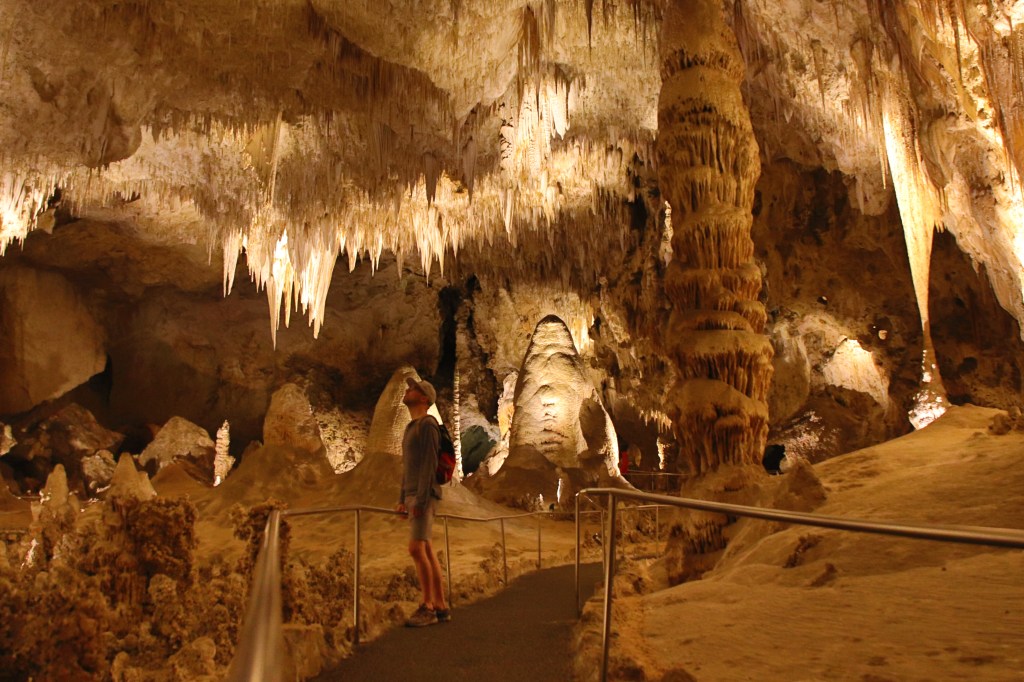
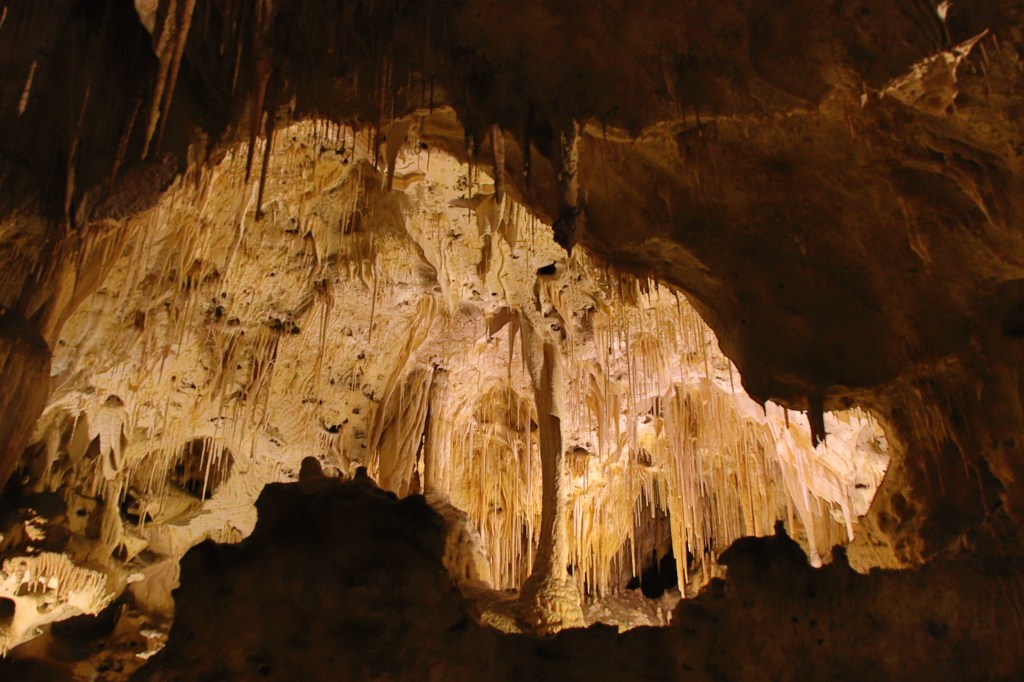
    The feeling persisted at Carlsbad Caverns on the walk down the natural entrance to the caves as I left behind the light and heat and descended into an unparalleled chamber, the scale of which is unimaginable, even as I gazed at it. I ached when I considered the slow pace at which this place was formed and the awesome coincidence of being alive to see it at this moment in time.

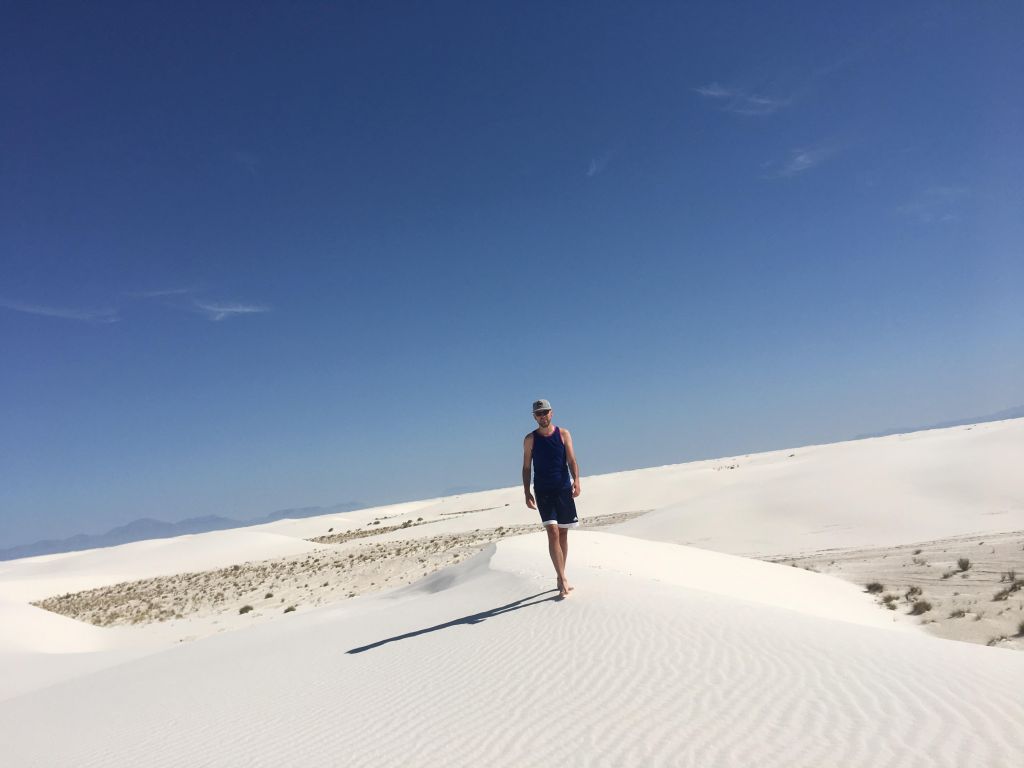
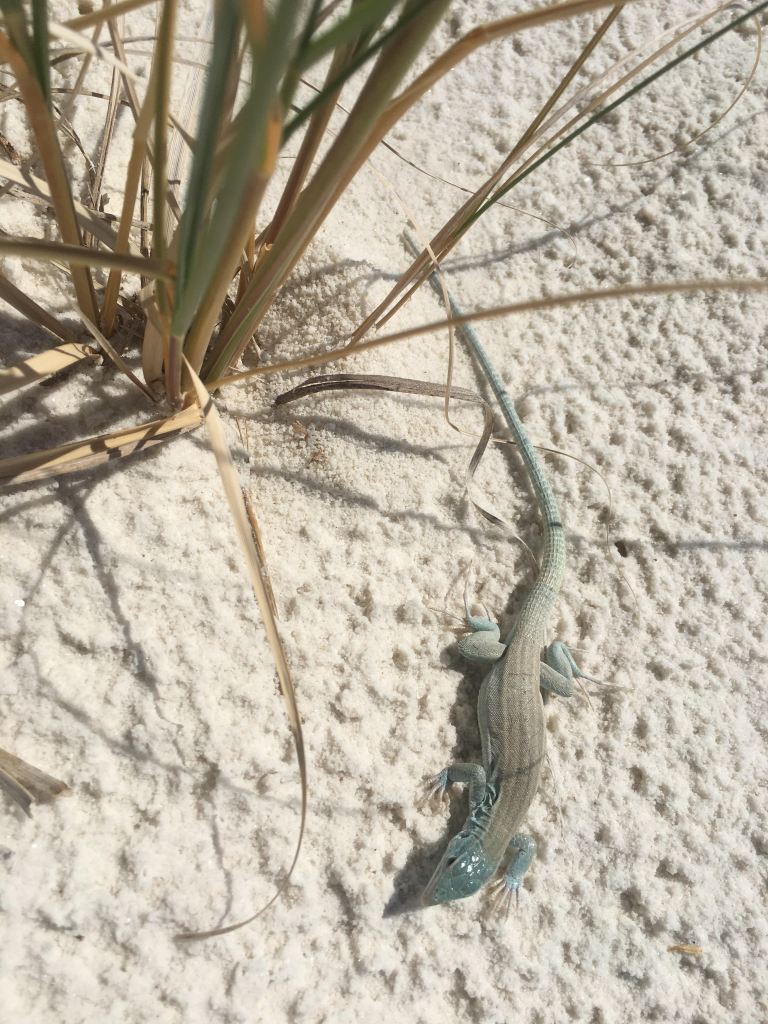
    And I felt diminished and amplified at White Sands National Monument, when, descending out of the Sacramento Mountains in New Mexico, the valley below was brown and gray but for one radiant strip of white gleaming 25 miles in the distance. Walking among the bare gypsum dunes and dodging the iridescent lizards made my heart beat faster and my mind clearer.

    These parks always have this effect on me. They diminish me and the amplify me. They restore my sense of self and my relationship with the world. They help me feel alive while reminding me of my temporary relationship with this life. The answers to all questions can be found in nature and as long as I have questions, you can find me in nature.

  • IMG_4048

    “The mountains are calling and I must go.” -John Muir

  • In the Time of Julia Alvarez

    Last night, as I was prepping my lesson, I reflected on the fact that there are three texts that I have taught for more years than any others: The Absolutely True Diary of a Part-Time Indian, Antigone, and In the Time of the Butterflies. It’s no coincidence that these are also among my absolute favorites, both to teach and as a reader myself. I’m teaching Butterflies right now in class, and in this sixth time through, while I rely on my approach from previous years, I am loving finding newness in this story.

    There is a scene at the end of chapter six in which Minerva is describing her journey from a meeting with Trujillo in the capital back to her home in the north of the country. Along the way, she describes the rain in each city she passes. Not only does this create a foreboding and depressive mood, I’ve always interpreted the rain as a motif for Trujillo’s absolute, oppressive control over the DR and its people.

    “We’ve traveled almost the full length of the island and can report that every corner of it is wet, every river overflows its banks, every rain barrel is filled to the brim, every wall washed clean of writing no one knows how to read anyway.”

    Out of curiosity, I opened up Google Maps and entered all of the place names Minerva describes on her trip home. Seeing her route up the autopista Duarte, the north-south spine of the Dominican Republic, gave fresh context to the totality of the rain, and by extension, Trujillo’s regime.

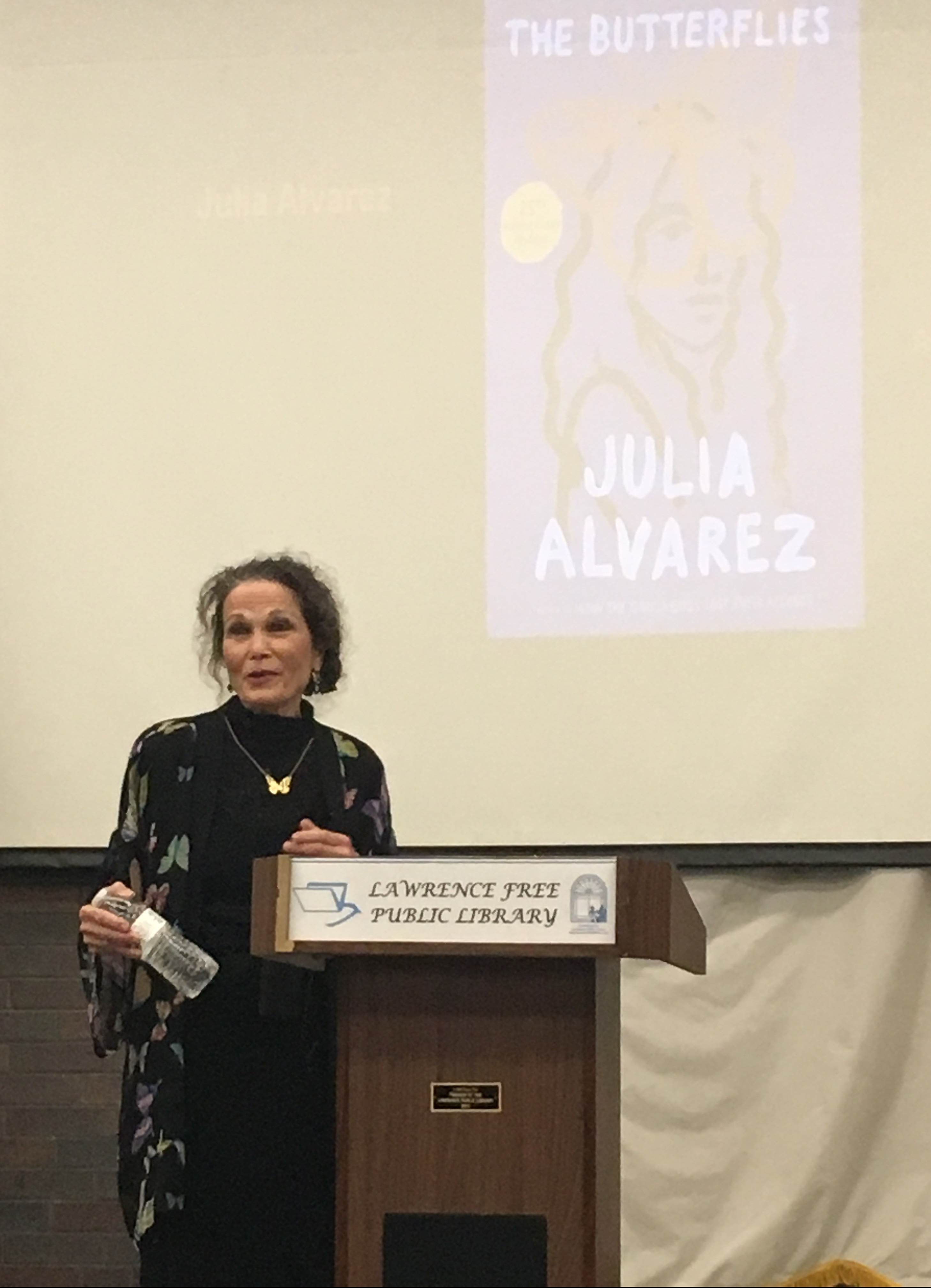
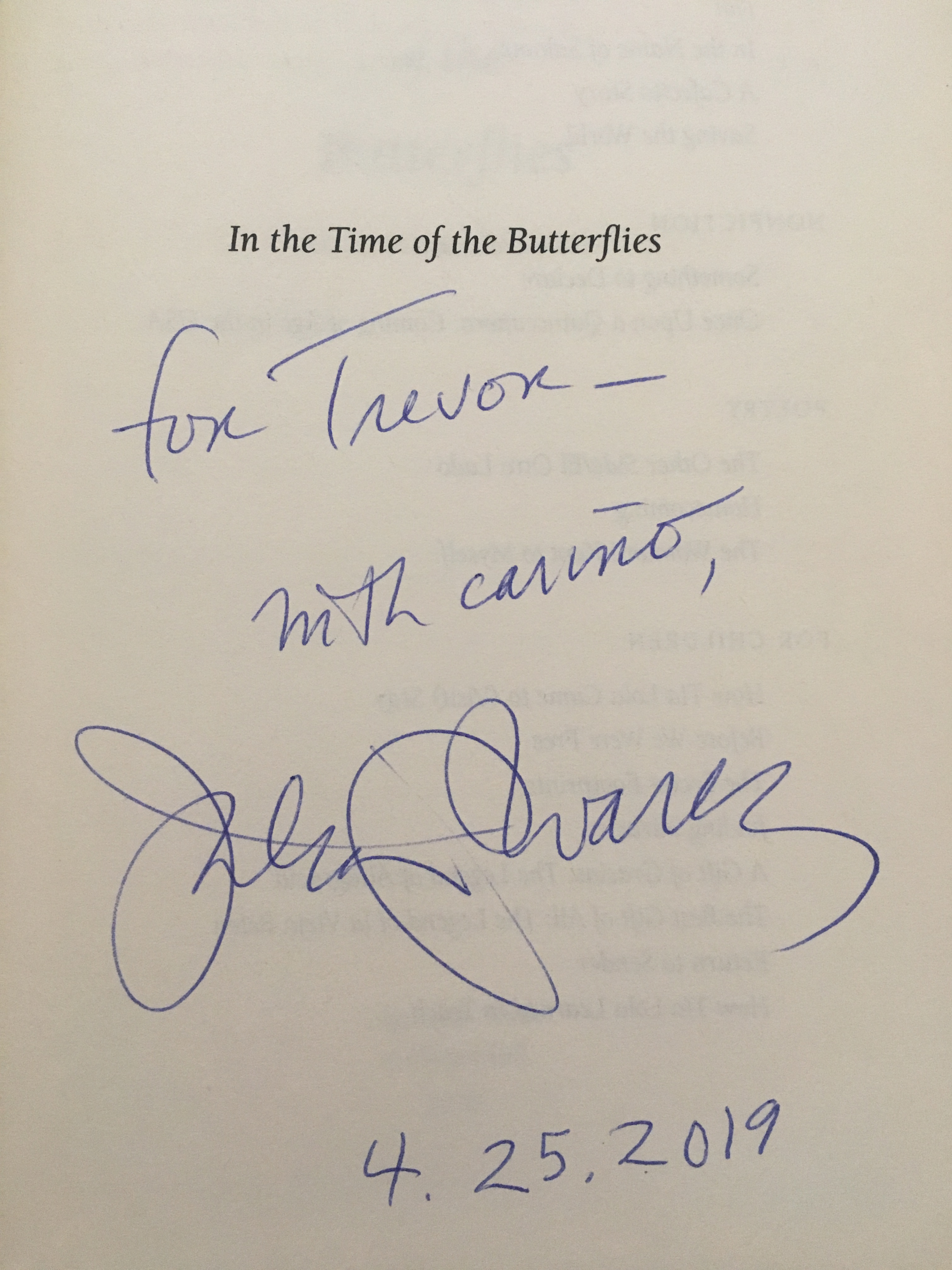
    A few weeks ago Julia Alvarez came to Lawrence, the city where I teach. Her visit coincided with the start of my Butterflies unit and I invited my students to attend her evening lecture at the public library. It has always been important to me that my students – most of whom are Dominican, like Alvarez – have access to their literary heritage. It’s more than simply curricular representation; rather, I strive to give them access to the nuances of Caribbean and Latin American literature and how history and identity have shaped a distinctive literary culture. In the same way that white students in the U.S. have internalized Eurocentric archetypes, plot structures, and literary features as an extension of Anglo history and culture, I want my Latinx students to be able to articulate what makes writing distinctly Dominican, Puerto Rican, Latin American, etc. The students who attended Alvarez’s lecture were enthralled to hear her describe the context that gave birth to her writing career because it is a context that is familiar to them. Many waited for over an hour after the lecture to meet Alvarez personally and get her autograph in their copies of In the Time of the Butterflies.

    As a relatively new student to Latin American literature myself, hearing Alvarez helped me broaden my own understanding of what makes her writing distinctively shaped by her lived experiences and the history of the Dominican people. Here are some of the most memorable things she said during her presentation:

    “I believe in the power of stories to change the world.”

    “One of the first things that happens in a dictatorship is that books are confiscated.”

    “I’m a human being. Nothing human is alien to us.”

    “Stories give you animo.”

    “I learned about storytelling from people who didn’t know how to read or write.”

    “When people ask: are you still writing? I respond: are you still breathing?”

    “Do what you love.”

    “Things you love are hard.”

    Finally – and notably – Alvarez also described that the first book she treasured as a child was 1,001 Nights. The core of her message about the power of stories was rooted in the lesson of Sheherezade’s persistence to change her fate through storytelling.

  • Modeling Lit Analysis with Audio

    In my neverending quest to find methods of modeling deep literary analysis with high transferability practice for students, I have recently started experimenting with some different lesson designs. In taking a cue from my STEM colleagues who rely on Khan Academy to do inverted lessons (when students learn the material independently and then teachers monitor the practice in class), I have started pre-recording my own guided analysis activities; then, in class, while students listen with headphones and answer questions about what they are learning, I can focus on what they are producing instead of on my delivery of the lesson. I like this format because it allows me to model for students what strong textual analysis looks like while also freeing up my focus and energy in class to focus exclusively on student understanding.

    There are a few criteria that guide this lesson format for me:

    1. Students need to have pre-read the text for homework. This includes completing their own annotations and thinking. If they didn’t complete the reading, they need to do so in class before they begin listening to the recording. I don’t spend a lot of time summarizing text or reading it for them on the recordings, so I need them to have a preliminary understanding of the text before they begin the analysis activity.
    2. Students can work at their own pace through the lesson, but they need to complete everything by the end of the period. While the recordings tend to be about ten minutes long, they are broken up by short questions throughout that they need to respond to before moving on. I make a companion worksheet for students to complete as they listen and cue them in the recording when to pause and answer questions. Their written answers allow me to assess in real time if students are understanding and pacing themselves well. If their response is accurate, I’ll silently give a check next to questions. If their response reveals some misunderstanding, I’ll ask the student to listen to a section of the recording again or do a quick reteach on the spot. In all, the lesson takes about 45-50 minutes for most students to complete.
    3. At the end of the activity, I ask students to synthesize what they have learned by responding to a longer written prompt. The prompt is frequently structured to push students’ thinking further than what they heard in any one part of the recording. This is vital because I still want students to be doing the intellectual heavy lifting; even though my analysis has raised the floor on how they might think about the text, I want them to use the interpretation I provide to go further than the clues I give them.

    In terms of preparation, it takes me about 45 minutes to write up a script for a ten-minute recording and then another 30 to record and make the corresponding worksheet. However, this prep time is invaluable in the classroom as it allows students to work at their own pace and I can focus all my energy in class on checking for their understanding (instead of delivering or guiding the lesson live).

    Overall, students like the format. I’ve asked for their feedback after each time I use this structure and it is generally positive.

    Here is an example of a full script I write for myself before recording.

    The materials for this lesson including the student worksheet, audio recording, and a magical realism reference sheet are available on my Teachers Pay Teachers store.

    This is a recorded activity to guide you through an analysis of Meat, by Virgilio Piñera, a Cuban writer who uses magical realism. As you listen, follow along and annotate your text. At certain points in the recording I will ask you to pause the recording and answer the questions on your worksheet. Do not go ahead in the recording until you have answered the required question.

    Let’s get started.

    In Meat, by Virgilio Piñera, the characters are forced to go to extreme measures because they are starving. The solution they find is to cut off, cook, and eat parts of their own bodies. When I see something that obviously is magical realism, since it does not make sense in the real world, I immediately start asking myself: what point is the author trying to make by introducing this magical element? In Gabriel García Márquez’s story, Light is Like Water, the magical realism is both a tribute to the relationship between a grandfather and his grandchildren as well as a warning about the power of the imagination. So, with Meat, we have to ask ourselves as we read: what point is the author trying to communicate to us by using magical realism? Pause the recording here and answer question number one on your worksheet.

    The magical realism is introduced at the beginning of paragraph 2. Take a careful look at these first two sentences in your text as I read them aloud: “Only Mr. Ansaldo didn’t follow the order of the day. With great tranquility, he began to sharpen an enormous knife and then, dropping his pants to his knees, he cut a beautiful fillet from his left buttock.” In these sentences, the magical and the ordinary are treated the same. In fact, look at the words used to describe what Mr. Ansaldo is doing. I first notice the word “tranquility” – he is clearly calm as he takes a knife and cuts off a piece of his own back side. Find one other word in this sentence that seems odd to use as part of this description of Mr. Ansaldo’s actions and reflects how the magical and ordinary are treated the same. Pause the recording while you find the word and write it on your worksheet under number two.

    The author, Virgilio Piñera, plays with verbal irony throughout the story. I’ll point out and explain one example and then I want you to look at another example on your own. Look about half-way through paragraph 2. Find the short sentence that says: “The facts were laid bare.” This is the author’s idea of a joke. This expression: the facts were laid bare, usually means the facts are obvious. But in this context, the word “bare” has a second meaning. In the sentence before, Mr. Ansaldo drops his pants and exposes his bare backside to his neighbor. The author is playing with language, using this verbal irony to remind readers of the absurdity of the story. He doesn’t want us to take this story too seriously. Now it’s your turn. Go look at the first sentence in paragraph 6. How is this sentence an example of verbal irony and what is the author’s purpose for including this? Pause the recording while you respond to question 3.

    One of the most interesting elements of this text for me is the relationship between the characters and their bodies. In the real world, our bodies are our part of our identity; they are who we are. They also must remain healthy enough for us to continue living in them. But in this story, the characters’ bodies become objects. They actually become meat, and technically, this is true of our bodies as well. At the end of the day we are animals like all others. Let’s talk for a minute about this word: meat. The story was originally written in Spanish and given the Spanish title, “La Carne.” In Spanish, the word carne means both animal meat AND the flesh of people. But in English, we would never use the word meat to describe human skin as carne is used in Spanish. The translated title makes this story almost horrifying to imagine as English speakers because we associate the word meat with animals and food. But the Spanish title, “La Carne,” plays with the double meaning of the word in a more subtle way since it can mean either food or human flesh. This is a great example of how the connotation of words can change in different languages and different contexts. Pause the recording while you answer question 4 about the title of this story.

    Aside from becoming meat, the characters’ bodies also become objects in another way. They become food. While we would normally be disturbed by the idea of eating our own bodies, the author makes this act something to be celebrated. In paragraph 1, the bodies begin as objects of starvation and suffering and by paragraph 2, they are transformed into a resource of nourishment and energy. In paragraph 3, Mr. Ansaldo teaches his neighbors how to cut meat off of their own bodies. Re-read paragraph 3 to the bottom of page 99; then find two phrases from this section of text that celebrate the discovery that the characters can eat their own flesh. Pause the recording while you re-read and answer question 5 on your worksheet.

    It is important to note that the most critical aspect of magical realism used in this story is that cause and effect are subjective. Eating your own body would be painful. Moreover, it actually destroys your body. And this brings us to the main situational irony of the story. Mr. Ansaldo and his neighbors are starving to death. Although eating their bodies solves the problem of starvation, it creates an equally – if not moreso – complicated problem of no longer having a body. Either path results in death. Given the absurd logic of this situation, we have to ask ourselves, what point is the author trying to make by using this magical realism?

    Here are some of my theories. As you listen, record my thoughts on number 6 on your worksheet.

    Eating your own body gives you control over a desperate situation. Starvation is a slow and painful way to die. It is also a passive way to die – it happens to you. By eating their own bodies, the characters are able to take active control over their destiny. That said, they seem unconcerned that this choice still results in their death. Which leads me to my next theory.

    Eating your own body is not meant to be taken literally; instead it is symbolic. Since the characters so easily embrace the act of eating themselves and don’t appear to be crazy, the story actually is trying to deliver a message about how people make choices that end up harming themselves. We are not meant to interpret “eating” as literal eating but rather figurative or symbolic eating. For example, people might smoke cigarettes knowing the damage they can do to their lungs. By smoking, they are harming their health in a similar way that the characters in the story are destroying themselves. Pause the recording and answer question 7.

    For this final part of the recording, please follow along with number 8 on your worksheet and fill in the blanks as you hear them.

    Whenever we see magical realism in a text, we should always be asking ourselves: What point is the author trying to make? Magical realism often is used to highlight the irony of a situation. It also forces us to look at a situation in a new way because we see the magic that the characters in the story do not.

    This is the end of the recording. Please finish responding to the questions on your worksheet and then follow directions on the board.
     

  • 8 National Parks

    When I set out on my cross-country road trip I had a vague idea that I wanted to see as many national parks as possible, but by the end of the summer, I had turned into a park collector. Had I been even more strategic from the start I may have aimed to get to a few more; Canyonlands was on my list but some car trouble in Arches (the 110-degree heat affected more than me) derailed that plan. But in the end, I made it to eight parks. Here are the highlights from each.

    Arches

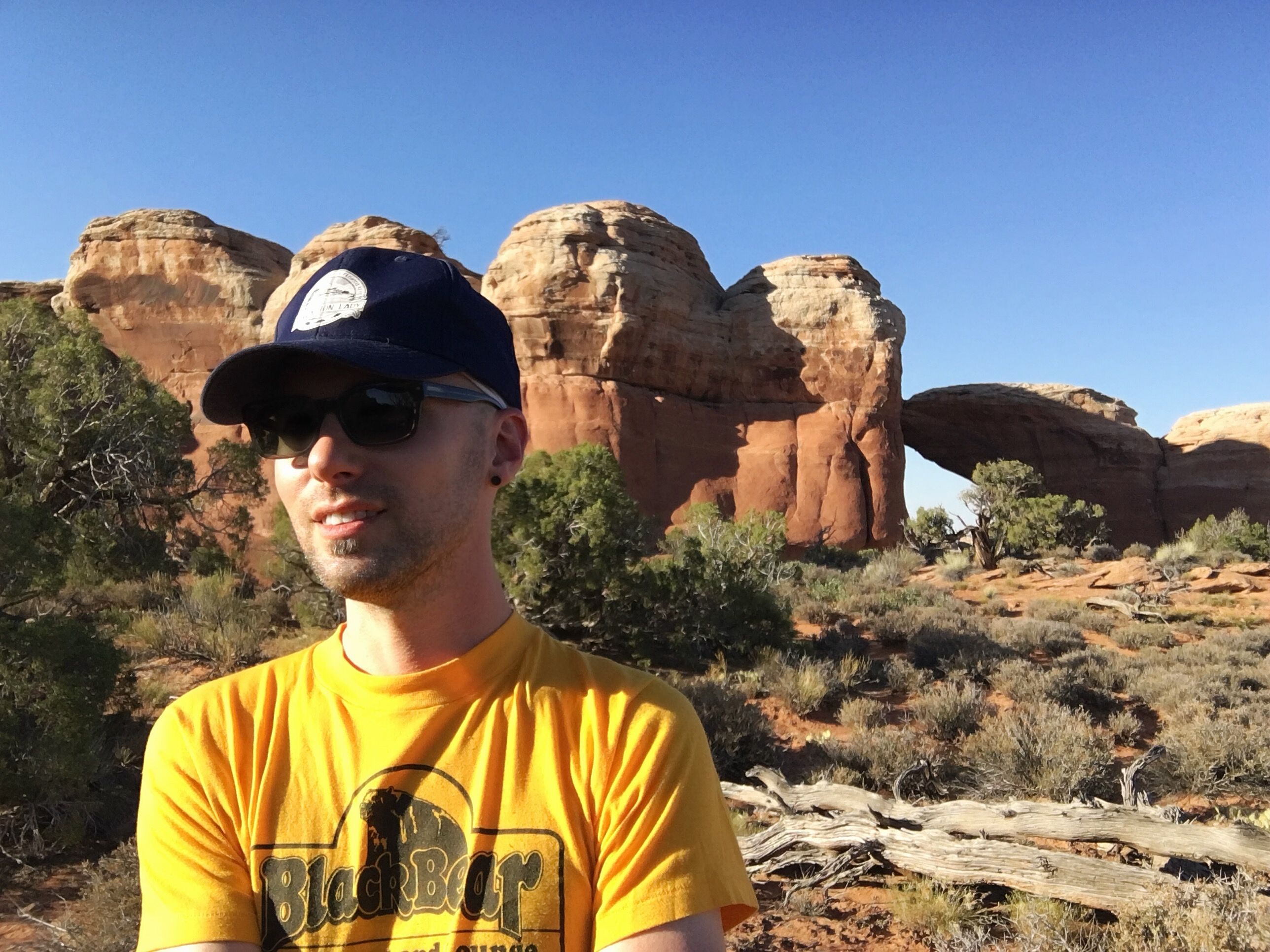
    I hold Arches in such high regard and have such awe for this place. There is a much longer story to my trip here involving both a car and a camera broken by the intense heat. It was 111 degrees when I arrived in the park. The heat was unlike anything I had ever experienced. Unlike the humid oppressiveness of East Coast and Midwest heat that I’m used to, the heat of the high Utah desert made me feel like I was both floating and simultaneously like I had tremendous pressure on my skin from all directions. There is no option but to move slowly and I found myself in a trance-like state while hiking in Arches. The heat had also driven away all but the most enthusiastic park-goers, which meant that at times there was no one in sight, despite parts of the park being so flat you can see for miles. One arch that required a 20-minute walk to reach was abandoned when I arrived and stayed so over the course of the 45 minutes I spent laying under it. Later in the evening I found a remarkable spot to sit back and watch the sunset slowly over the course of a couple hours. Despite the extreme condition, I will forever associate the intense, full-body experience of the heat of the sun with Arches.

    Badlands

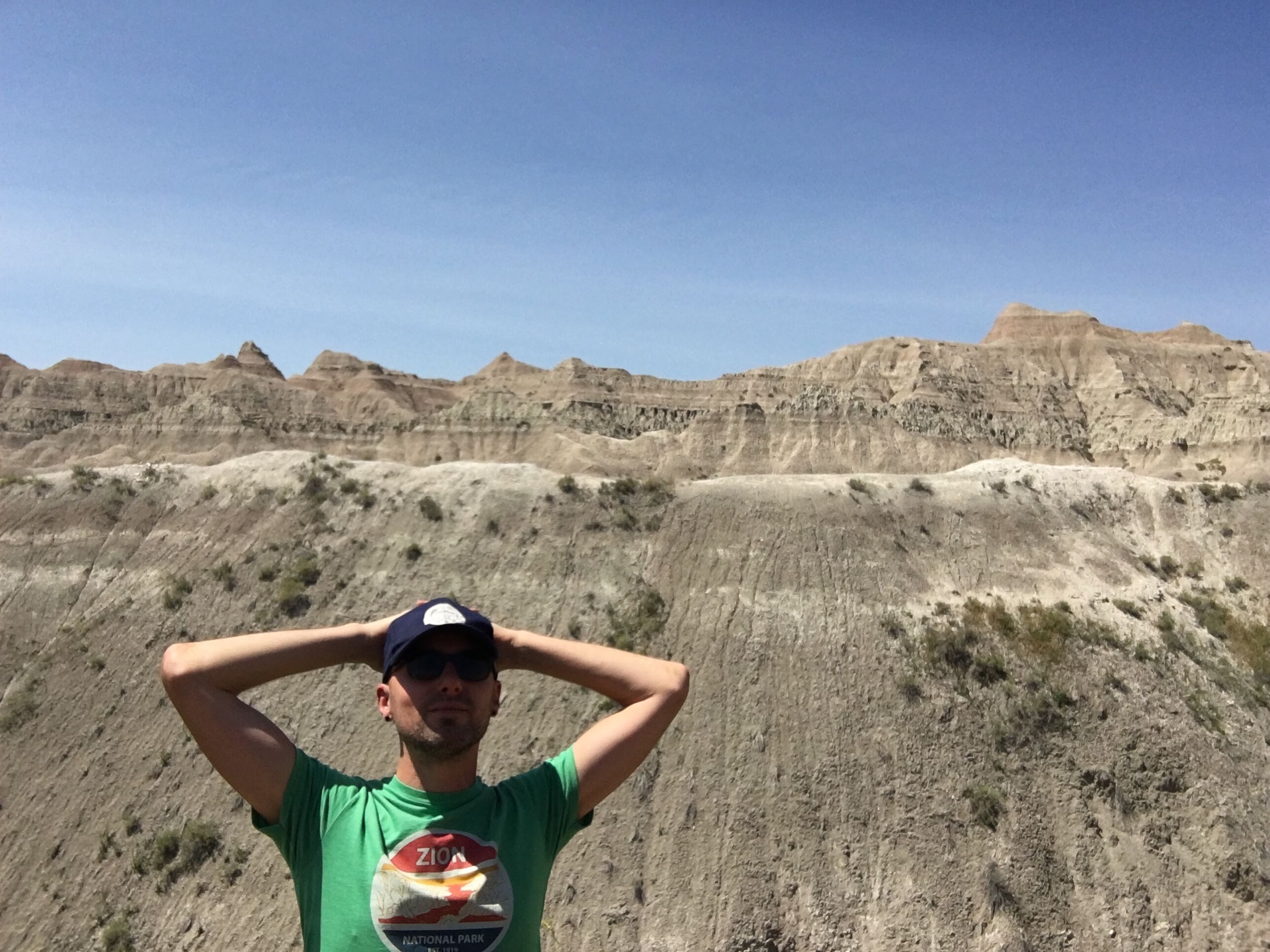
    To be honest, I didn’t have high hopes for South Dakota. Is that an obvious thing to say? Badlands does not seem to have the associations of grandeur in the imagination as more well-known parks. This is a shame. I was blown away by the beauty of this park. Standing on the edge of the prairie and seeing grassland and then turning around and seeing that you’re really standing on the edge of earth as the prairie falls away under you and centuries of earth are exposed to the eye. I fell in love with the vistas over the park, but the most exhilarating part of my time here included walking on the trails through the park and feeling the late afternoon isolation of the nature around me. There are parts of this park that could just as easily be on the moon.

    Bryce Canyon

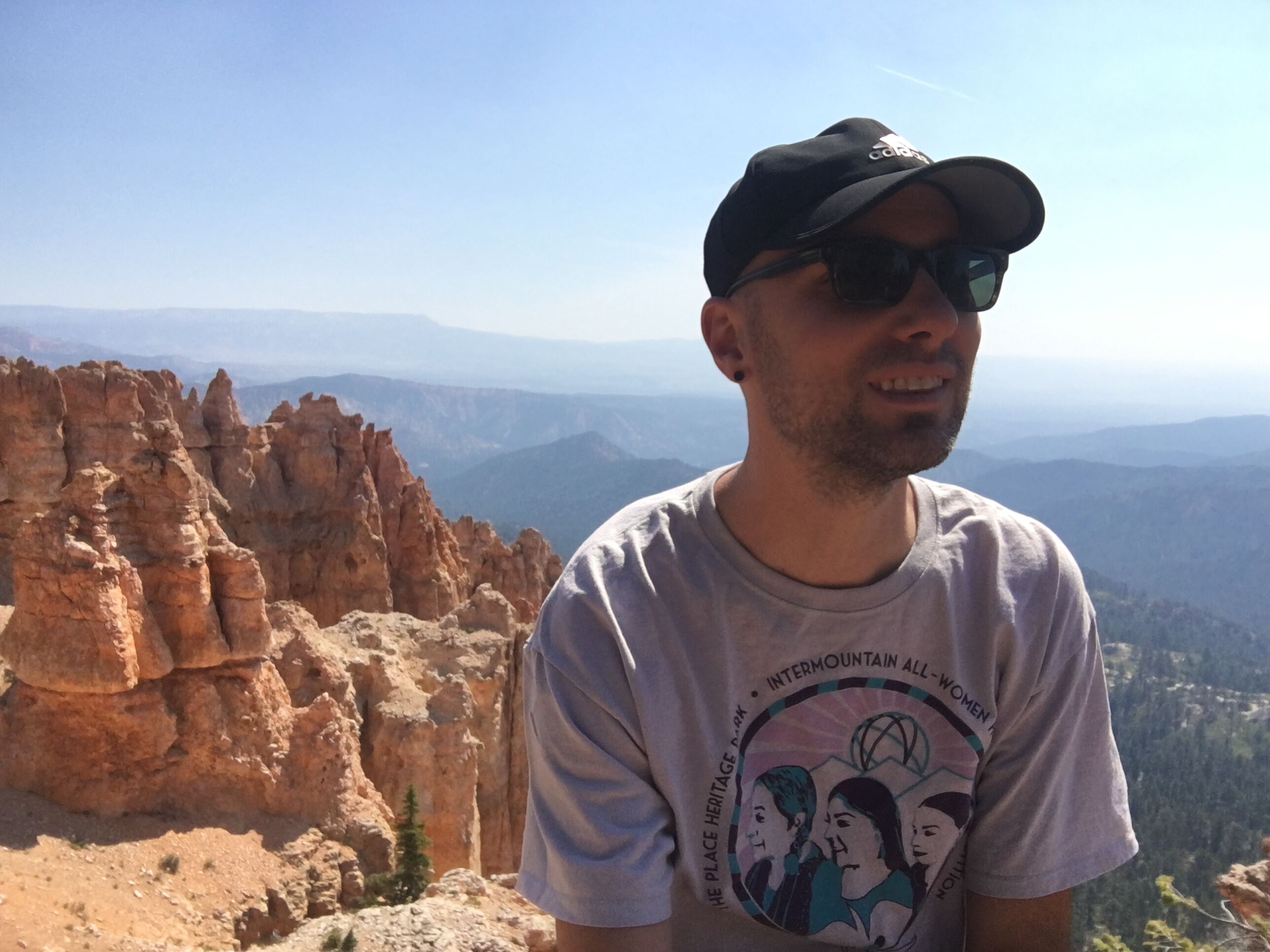
    Despite the fact that Bryce Canyon is only an hour’s drive from Zion, it feels remarkably isolated. None of the crowds of Zion were present in Bryce, and while the scenic overlooks and shorter hikes had a steady flow of people, the vibe was quiet and peaceful. There were moments in Bryce Canyon when I truly felt completely alone. Bryce can be viewed from its rim, which is easily accessible by road, or by hiking down into the canyon itself. I hadn’t budgeted the time to do any hiking, but I can see how appealing it might be given that the shadows from the hoodoos and canyon walls offer relief from the Southern Utah heat.

    Crater Lake

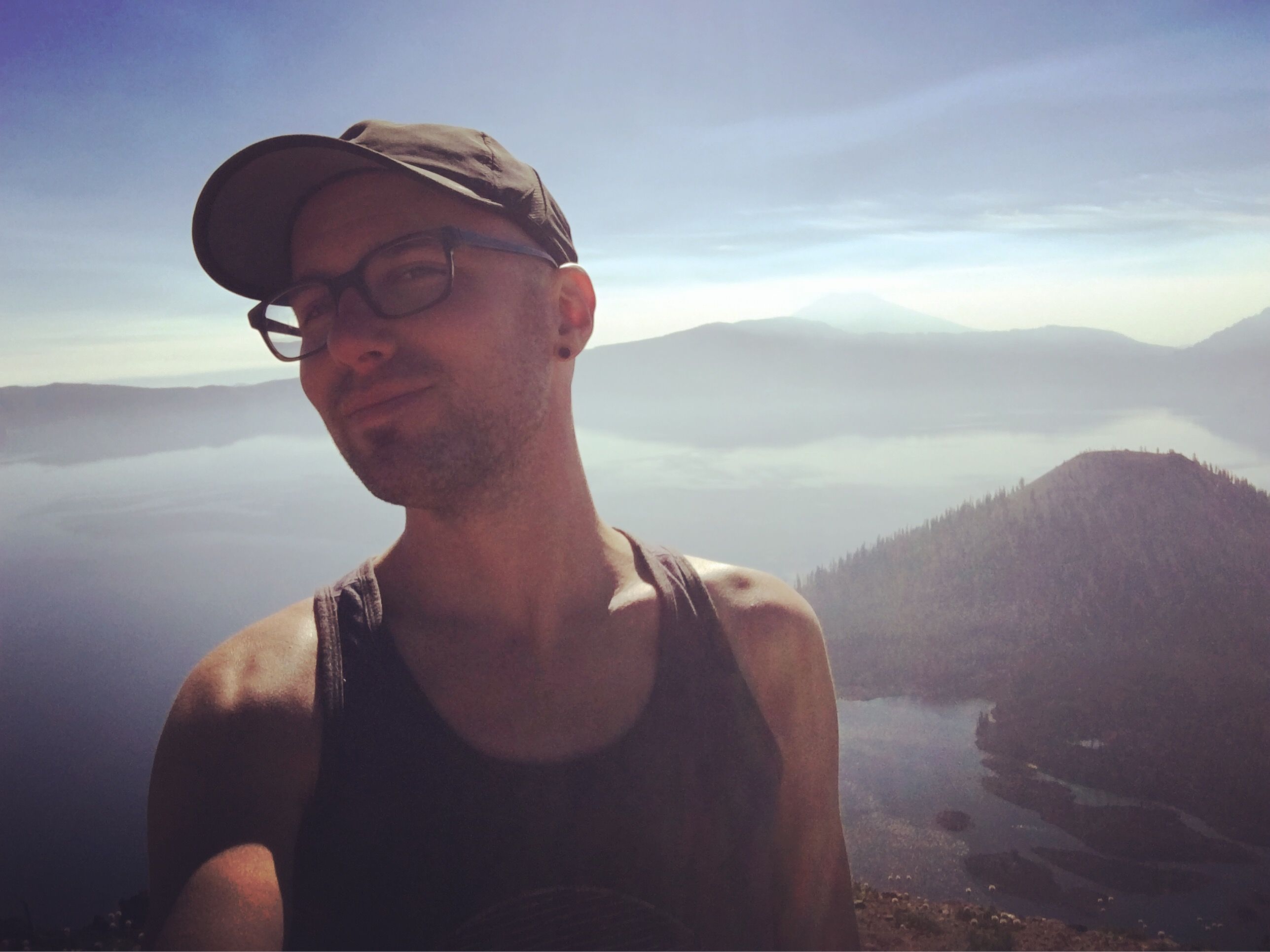
    I fell in love with Crater Lake the first time I visited years ago and return trips only serve as reminders of how perfect this place is. It is located only an hour from my brother’s home so it’s an easy trek when I’m visiting. Sitting on the rim of the caldera in nearly any location throughout the park is an awesome experience. You are granted with unbelievable views and because of the sheer size of the crater, it’s rare that other visitors are obscuring your view. Even when the park is busy, you can find yourself looking across miles of space without another person in sight. One of my favorite activities in the park is jumping off rocks into the lake. On a clear day, the blue sky reflected off of the totally clear surface of the water creates an illusion that tricks your mind into believing there is no water at all. The surface of the lake always comes as a surprise as you plunge into the seemingly endless depth of this lake.

    Redwoods

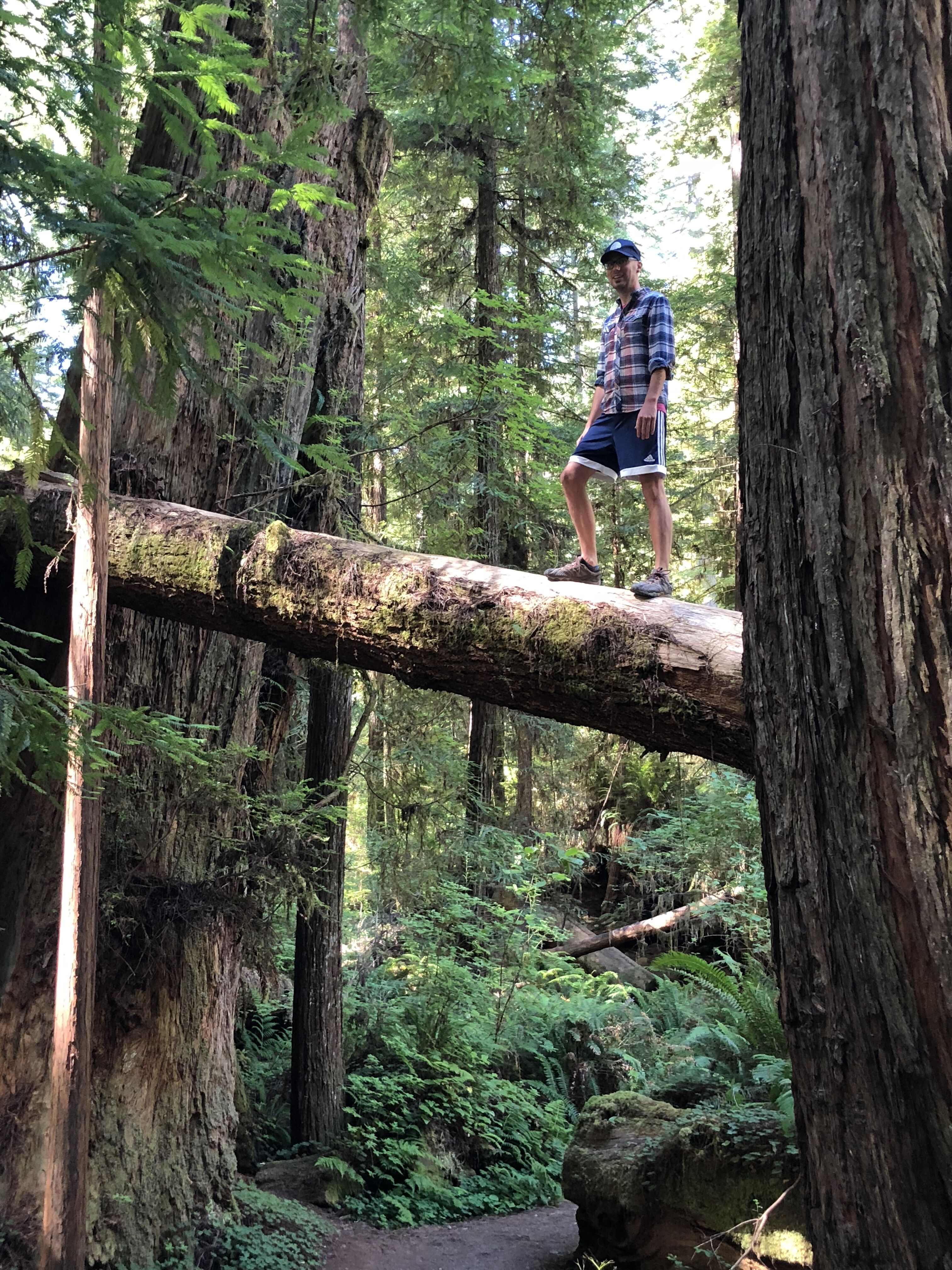
    I seemed to remember crowds in Redwoods and was bracing myself for tourists, but I think I was mistaken. Despite its majesty and relative proximity to the Bay Area and other smaller population centers on the West Coast, I don’t think this park gets a crush of traffic. Not that I’m complaining. Redwoods National Park is adjacent to Redwoods State Park, and despite being next to one another actually do have a different feel from one another. If anything, I found that the State Park is more diverse topographically and has some of the more impressive roadside turnouts. That said, I enjoyed the longer day hike I did in the Tall Trees Grove, which is in the National Park, which featured a relatively accessible hike down into a gorge and involved some wading along a river. I can’t recommend highly enough the experience of walking in old growth forest.

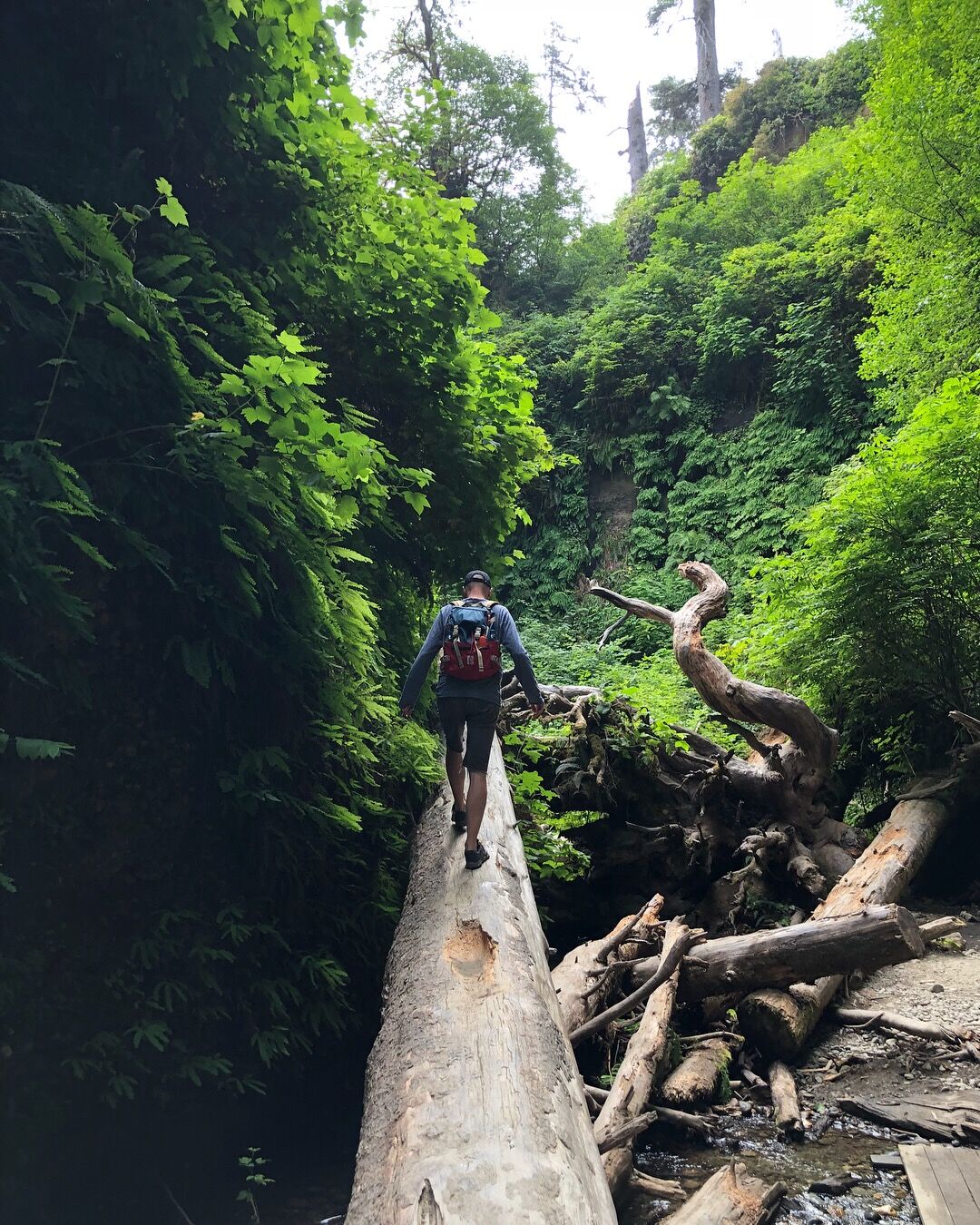
    Another highlight of this trip was hiking Fern Canyon in the State Park. Last time I was here, we had opted not to drive to Fern Canyon (despite the allure of it being a film location for Jurassic Park) because of warning signs about road condition. The truth was that I had to drive through a river that crossed the road, but it was not too deep that my Subaru couldn’t make it. And it was so worth the treacherous road. Fern Canyon takes its names from the ferns and other flora that hang off its walls. It is intensely lush. The trail is well worn, but there weren’t too many people here (I saw that some had been deterred by the river across the road). A relatively small and shallow creek flows through the canyon, but it has almost a rain forest feel to it since it is near the coast and gets regular soakings from the clouds coming off the Pacific.

    Tetons

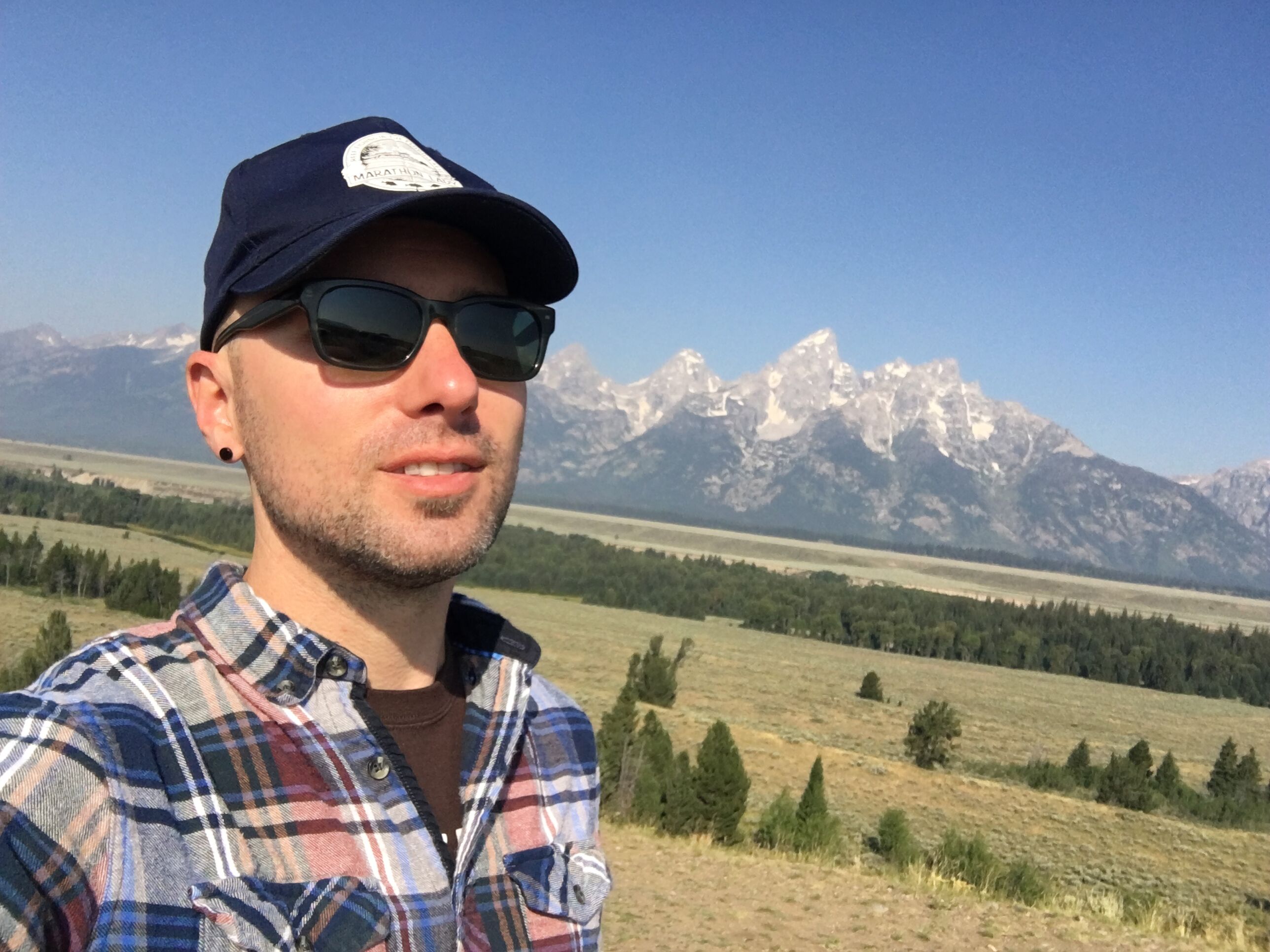
    Every time I experience the Tetons it’s always from US-89. Viewing a spectacular mountain range from the comfort of your car and some scenic pullouts may not seem terribly thrilling, but the Tetons is an exception to this rule. The long grassy plain dotted with lakes and pockets of trees that sits in the valley adjacent to the Tetons provides ample opportunities and angles to take in these mountains.

    Yellowstone

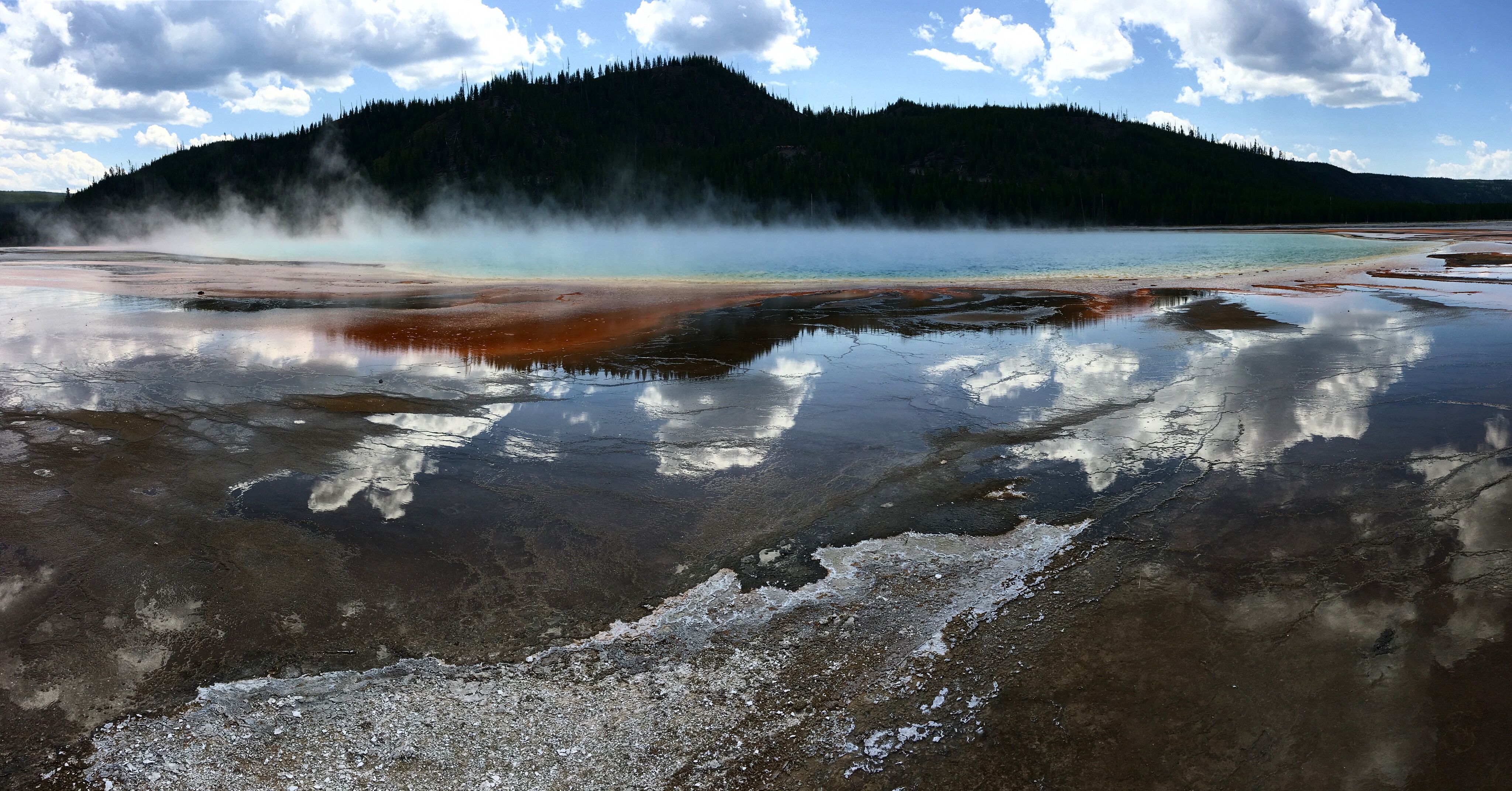
    This was my second visit to Yellowstone and while I went in expecting to be overwhelmed by the crowds of people, I was pleasantly surprised by a few experiences that made up for the lack of solitude. The first was seeing Grand Prismatic Spring. The last time I was in Yellowstone it didn’t work out to visit. It truly is the crown jewel of the park. Perhaps it was the light at the moment in the day I was there, but the reflection and colors of the spring were otherworldly.

    The other amazing experience was my encounter with a bison. Although this is common in the park, and not the first time I had been close to one of these incredible creatures, the story this particular individual told as he kept crossing my path was remarkable. I caught most of it on video, for which I’m grateful that I can preserve this experience in my memory as it happened.

    Zion

    One thing I have learned to do is figure out the national park hacks by asking a few strategic questions to park rangers based on what I want to get out of the park. This was an especially useful approach in a boutique park like Zion. I imagine that most people who visit Zion have an experience more akin to visiting Disney World than one that is truly natural. I most appreciate parks when I feel like I’m able to interact with the surroundings without an excessive amount of tourists. That said, I also rarely do the deep woods, backcountry camping excursions that might lend themselves to the isolation I desire.

    In Zion, we asked two questions at the visitor center that paid off significantly.

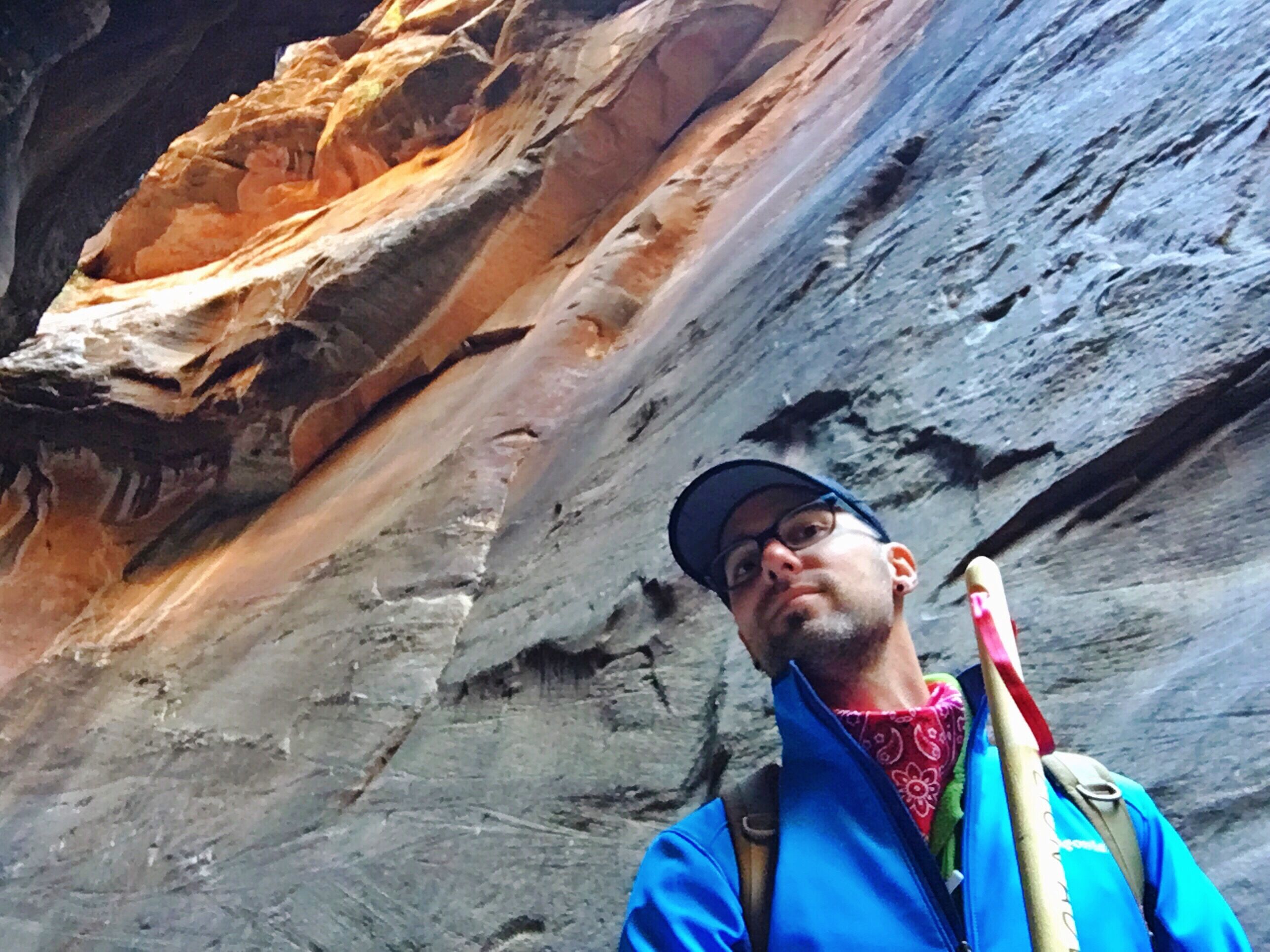
    1. What should we know about hiking up the narrows? The best advice was leave early. We were on the first shuttle up to the head of the trail at 6:00am and it paid off. Our hike up the narrows was so serene with very few other hikers. While there were always people in relative proximity to us, we also were able to take plenty of photos that made us look completely alone. However, by the time we turned around at noon, and headed back down, the crush of the counterflow of people reminded me of a zombie horde in The Walking Dead. The other useful suggestion was to hike with a walking stick. We ended up renting poles from a local outfitter for $5 well spent.
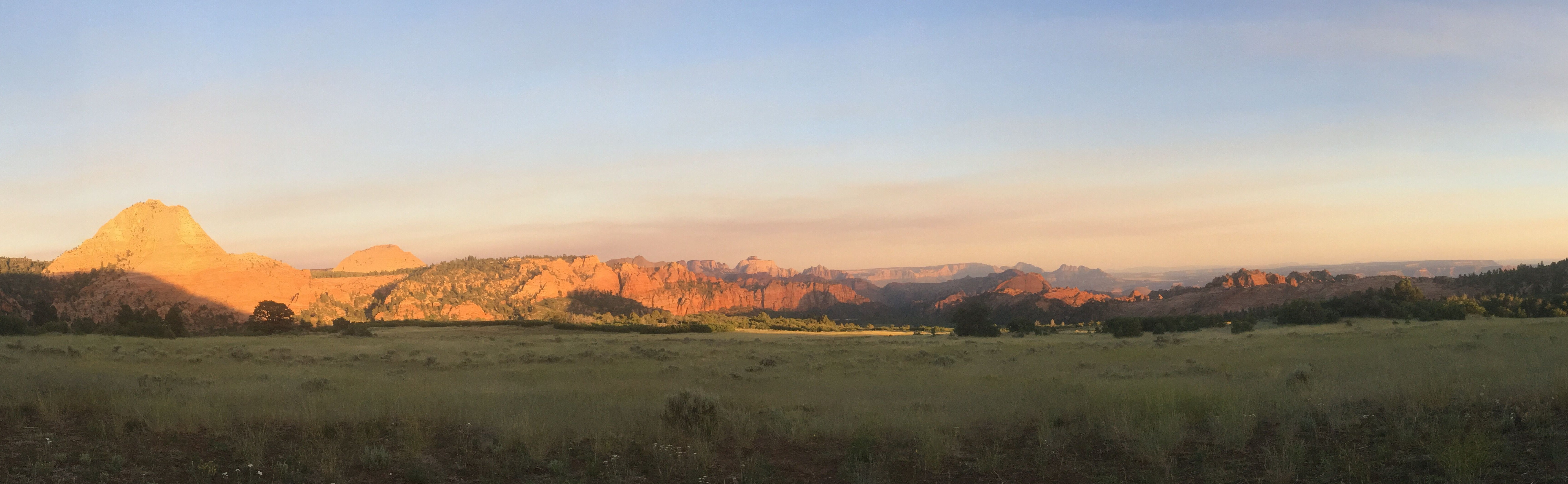
    2. Where is the best place to watch the sunset? Go to the west side of the park. We were directed up Kolob Terrace Road off Utah Highway 9 from the town of Virgin to the west side of the park which led us to a stunning view looking back east over the park as the sun lit it up. The area was also entirely isolated. In the two hours we sat on the side of the road watching the sunset and photographing wildflowers, no more than ten cars drove by us on the road. This was an incredible respite from the crowds and truly one of the best sunsets I’ve ever witnessed.
    ldMx9rxW


  • Catch the pieces

    A poem I scribbled in the notes of my phone while sitting on my front porch on a spring afternoon. Inspired by two students who put their trust in me.

  • Another “crazy” woman

    “My mom gets crazy when I’m not doing well in school.” -14-year-old student

    This week I turned my class’s attention to the idea of critical theory and specifically the concept of reading a text with a feminist lens. While some may argue that middle school is too early to do this, I have increasingly found that critical theory adds nuance to students’ thinking by providing them an avenue through which they can interpret text. Simply asking students what they see in a text generates a broad range of response, some of which are more helpful at moving their thinking forward than others. While there are tasks that are appropriate for this open-ended approach, I find that students benefit from going through a text with an analytical framework and a distinct set of vocabulary through which they can explore, critique, and understand a text.

    We’re reading Antigone. Notably, I went back to using the Robert Fagles translation this year after two years trying Seamus Heaney’s. The Fagles translation, published in 1982, is replete with the pathos that I associate with Greek tragedy and students immediately draw comparisons to the more melodramatic telenovelas that some are more willing than others to admit they watch. Aside from the richness of the language, what I also like about Fagles’ Antigone is that it provides an accessible opportunity for students to see the gender dynamics that are inherent. As a Greek woman, Antigone acts out of a duty to her oikos. As a powerful Greek man, Creon is obsessed with the polis. The play is as much about the two characters as it is about restoring the balance to the oikos and polis of Thebes, both of which have been thrown into disarray as a result of the fate of Oedipus, the war between Polynices and Eteocles, and subsequently, Creon’s ill-fated inheritance of the city and denial of burial rites to Polynices. One of the ways Creon’s brand of hubris plays out in the story is that his objections to Antigone take on distinctively misogynist overtones.

    However, it was one of the more subtle examples of misogyny as opposition to Antigone that later provided an opportunity to challenge the casual misogyny that we all experience today. When Antigone is brought before Creon for the first time, the Chorus tries to make sense of the revelation that she is to blame for burying the body of Polynices and breaking Creon’s law (lines 417-424):

    Here is a dark sign from the gods —
    what to make of this? I know her,
    how can I deny it? That young girl’s Antigone!
    Wretched, child of a wretched father,
    Oedipus. Look, is it possible?
    They bring you in like a prisoner —
    why? did you break the king’s laws?
    Did they take you in some act of mad defiance?

    The subtle misogyny is easy to miss without an understanding of the historical and cultural context of describing woman as mad or hysterical. This is not a new phenomenon but rather one that is part of all patriarchal agrarian societies; it was the ancient Greeks, after all, who coined the term hysteria. We talked as a class about the inherent problem of assuming that Antigone is motivated solely by emotional rebellion; this assumption is rich with irony given the moral high ground on which Antigone stands at this moment in the play. It has always been the easiest dismissal of women to call them mad.

    But this point became most salient to one of my students outside of class later in the day. He approached me with concern about his grades and behavior. Since he is a strong student and earnest in his behavior most of the time, I asked why he was concerned. With the close of the quarter and upcoming parent conferences he said, “I want to be sure everything is good because my mom gets crazy when I’m not doing well in school.” It was a casual comment that I’m certain most 14 year old boys have said about their mothers at one time or another. Even though I know this student has a strong relationship with his mother, I knew instantly I had to point out his word choice. I asked, “Your mother loves you enough to want to make sure you’re successful in school, right?” He nodded. “But you’re a male who just called his mother’s expression of her love for you crazy.” His eyes immediately widened and he let out an audible gasp as he quickly realized the connection I was making.

    The moment was easy enough for me to point out given the relevance to the day’s earlier lesson. But it has since had me reflecting more on the casual misogyny that exists all around us and how it enters my own language. This student was mature and reflective enough to have realize his mistake. I am acutely aware of the disparity between how confident my male students use their voices in class and how silenced my female students can feel. While I actively try to create space for female voices and quieter voices, I realize more needs to be done on this front. A few thoughts that feel most salient to me:

    1. It’s not just about my actions to create a classroom where all students develop a strong sense of voice; I need to teach students to be aware of how their gender influences the way their voices are perceived and valued so that they can do this work for themselves.
    2. As a male teacher, I must model for my male students the ability to be silent for the express purpose of giving female voices space. Similarly, I must model how to disagree without dominating.
    3. It is inevitable that casual misogyny will come up in the classroom. Given this, I must be more aware of how I play a role in ensuring it does not go unaddressed.

    The student with whom I had this interaction was gracious and mature about my response to him. While I know it won’t always go that way, it gives me comfort to know that English class is doing exactly what I believe so strongly it has the power to do: reading good books makes us better at living our lives. The fact that it was a 2,500-year-old Greek tragedy that created an opportunity for this reflection to occur for my 14-year-old student and for me is what I most love about teaching English.

Something went wrong. Please refresh the page and/or try again.