• Lunequisticos

    After 15 years teaching English, it is a rare thing to walk into class feeling confounded by the text I am teaching. On a whim I had selected to include Victor Hernandez Cruz’s Lunequisticos in my short literary unit on Latin American identity and diaspora; without reading too closely, it clearly deals with the dissonance of bilingual and bi-cultural identity. It wasn’t until the days leading up to the lesson when I began prepping that I realized what I had gotten myself into:

    –A poem filled with intentional incoherence in both English and Spanish.

    –My eighth grade students who – on some days – view poetry as a confounding literary torture device thrust upon them against their will for the sole purpose of reminding them how much school sucks. It is worth pointing out that a significant number of my students are English language learners, some of whom have only been speaking English for two years, so English class can feel – understandably – overwhelming.

    –My own unfamiliar anxiety as I rehearsed my lesson opening: “I’m not really sure what this poem is about.” In experiencing this sensation I concluded that at least some part of my success as a teacher must come from my otherwise well-practiced ability to say something interesting about texts and thereby sound competent enough to ask my students to listen to me.

    But there it was on page 15 of the text packet I had assembled for them: the poem that was sure to cause my destruction as an English teacher.

    Lunequisticos

    In what language do you jump off one boat
    to get to another one to buy something cold
    to drink while at the same time you contemplate
    The shapes and curves of the eyes the various
    family trees have produced in all the people
    present buying something cold to drink
    The shades of minds each beaming glaze of their
    spirit all being here for a second of my questions
    I am in the young woman’s tenor her lips drum
    pictures of thin Spanish fans waving
    Ships sailing in pictures hanging on living
    room walls  Chaotic room of thirsty tongues
    Moving my whistle sounds to investigate
    Each glassy eyes my windows
    Their fires in the cold drinks
    So if you ask my creature friends in what language
    do I ask the question to come in: Do I take my
    Oye/lo/que/one/time/eva/or/iva/decir/que/uno/una
    ves/sepuso/la/cosa/de bullets/peor que/one guerra
    en/the/escuela/corner/de/maestros/ya/con/lisencia
    y/todo/una/mes/mass/de/masas/tambien/con/masa/cuando
    ella/pasaba/lo/profesores/le/cantaban/siquiere/gozar
    ben/a/bailar/tengo/libros/de/to/colores/estudiaremos
    el/at/most/feat/el/turn/de/una/language/como/hace/in
    side/the/mind/calculate/while/it/separates/words/in/two
    languages/sounds/spellings/systems/whole/tone/latitude
    and/altitude/altiduego of voces/in/gas/communications/gets
    filtered/and/ironed/tambien/the/two/musics/through/one/breath
    Para/
    Or do I spray it around in straight talk
    Filtar: Presuming you tailored the rough edges of your
    tenor  dress it up with my wave of syllables say to me
    What is your idea what flavor did you ask for
    In what tense does it remain the same color when it
    laughs in your cup.
    Pure orange juice.
    Pure ginger root-boiled.
    Pure grapefruit – the ones with freckles.
    Pure Spanish/Pure English
    Pure tunes tos tono tos tones
    When is exactly Saturday and Sabado two different nights
    Do you say in one aspect of the night your deep feelings
    to whoever might be involved in a need to hear them from
    you or do you avoid what’s really going on and talk other
    heavens go over to the jukebox before ordering a cold
    drink put on Tito Rodriguez’s “Double Talk” put the boat
    In reverse and relax you have just given birth to twins
    The tongue figures out how not to jump from one boat to
    another and takes a dash out onto the street where the
    wrong speed can brake anybody’s record.

    My frantic online searches for scholarly analysis about this poem yielded little: a one-line note on one site about the intersection of power and language. The Norton Anthology of Latino Literature, where I originally found the poem, points out “…the sounds and structures of Spanish and English collide to produce a downpour of rhythmic code switching, chaotically defying the notion of linguistic purity.” Helpful, but, I still could not figure out the meaning of the title (moon? lunatic? linguistics?), let alone interpret the bilingual jumble (or as one of my students ended up calling it, the “word bank”) in the middle of the poem. I asked friends and colleagues who are native Spanish speakers to  help me make sense of the poem. We all agreed that it was intentionally meant to confound, but struggled to find a cohesive story to tell about the poem that would make sense to 14-year-olds.

    So I swallowed my pride, walked into class, and said, “Today we are going to read a poem that is probably going to make your brain melt a little. It certainly made mine melt. But let’s ask lots of questions of each other and the text and see where it takes us.” If anything, this reminder that curiosity is really the best approach to literature – especially rigorous texts – was my most significant realization from this lesson. Wondering is a better starting point than knowing and for all our talk of proficiency and testing, this alone was a useful moment for me.

    I started by reading the poem aloud to students. And there was brain melting. A lot of it. But then, something pretty awesome happened as we re-read, wrote, discussed. This poem got inside everyone in the room. They could not stop thinking about it, talking about it, re-reading it. They translated pieces of it into English and then into Spanish and back into English. I had intentionally given them a chance to opt out of this poem by giving them a homework assignment that allowed them to choose this or another, more accessible poem we had just read to analyze; the vast majority of students chose Lunequisticos. One student reported that he had sat down with his Spanish-speaking mother and made her read it with the hope that she would find something we missed in class. After class I caught them examining the poem during their free time. And I don’t just mean the students who will always go above and beyond; everyone from the kid who too frequently zones out in class to the one who claims, “It’s not personal but I’m just bored in your class, Mister.” They were hooked.

    A few observations were especially interesting to me.

    One of most interesting moments of the lesson came when one of my more fluent, bilingual readers volunteered to read the poem. When he came to the second line in the “word bank” he read, “ves/sepuso/la/cosa/de bullets/peor que/una guerra… wait… unauna guerra/en/the/escuela…” Instead of reading “one guerra,” as the author wrote it, he instinctively translated it into the Spanish, caught himself making the mistake, and then “corrected” himself without actually reading the line correctly. It happened in a second, but seemed to shine a brilliant light on Hernandez Cruz’s design of the poem and his point about the power and dissonance inherent in language, translation, and bilingualism.

    Another of my ELL students, relatively newer to English than others in my class pointed out that, just like in the poem, Spanish and English are frequently battling to make meaning in his head: “This is what it feels like in my brain all the time, Mister.”

    What I learned to love about the poem over the course of this lesson was that there is so much to unpack that – rather than be totally inaccessible to middle schoolers in general – it gave everyone, despite their range of reading levels from third through twelfth grade, something to notice. Some students were fascinated by the ways in which Hernandez Cruz uses both Spanish and English. Others quickly caught the metaphor of jumping from one boat to another and the symbolism of the drink. Still others focused on repeated words in the text: tenor, pure, eyes, tongue. Or the (intentionally?) misspelled words or awkward constructions: uno/una/ves/sepuso, siquere, brake.

    Many students immediately saw connections to other texts we had read in class that I, in my panic to understand the poem, had initially missed. In Lunequisticos, they saw echoes of Julia Alvarez who describes the in-between-ness of learning English, in Entre Lucas y Juan Mejía, as “frightening” when she realized, “I began losing my Spanish before getting a foothold in English. I was without a language.” They compared the confusion and dissonance in Lunequisticos to the “…slow scream across a yellow bridge,” and the idea of being “cast out from the new paradise” in Juan Felipe Herrera’s Exiles. And they pointed out the parallel idea of language and place as a proxy for a sense of belonging when they compared “jump[ing] off one boat to  get to another one” and, “No nací in Puerto Rico/Puerto Rico nacío en mi,” from María Teresa Fernández’s Ode to the Diasporican.

    Lunequisticos got under our skin in the way good writing should. It left us with more questions than answers. It spoke to the complexity of my students’ experiences as Latin@, as Spanish-speakers, as English-speakers, as bi-cultural. And, at least on some level, I’m sure that some of my students connected with this poem as teenagers out of a desire to understand its complexity as all teens want their own complexity to be seen, honored, and understood.

    We still haven’t figured out what the title means.
  • One Afternoon in San Francisco: Why I Love This City

    1. Waking up in my own bed, driving to Boston and taking off over the Atlantic ocean on a perfectly clear day was awe inspiring in and of itself.  But the airports in both Boston and San Francisco are built on water.  The fabulous juxtaposition of taking off over the Atlantic and landing over the Pacific five and a half hours later is stunning.

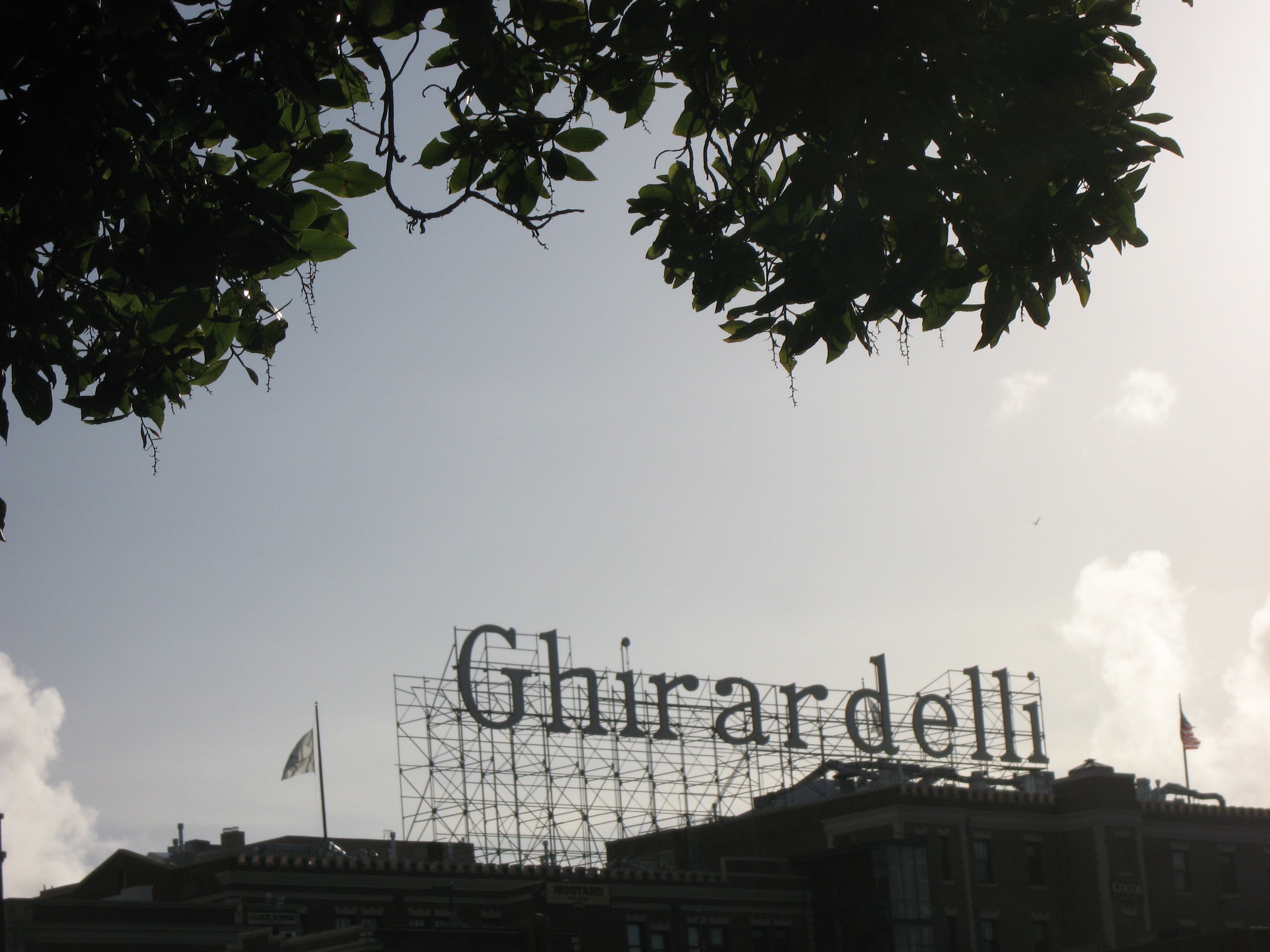
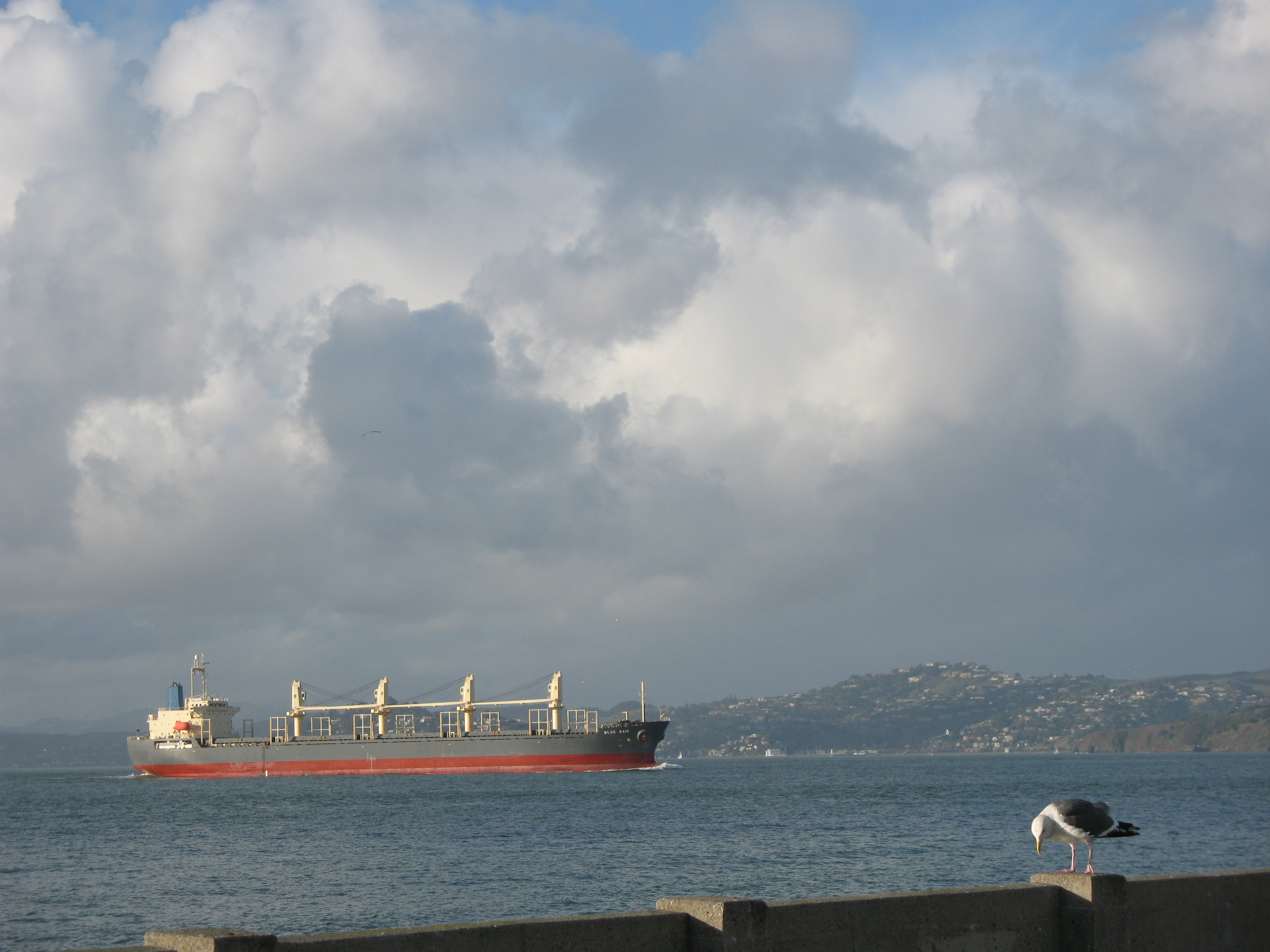
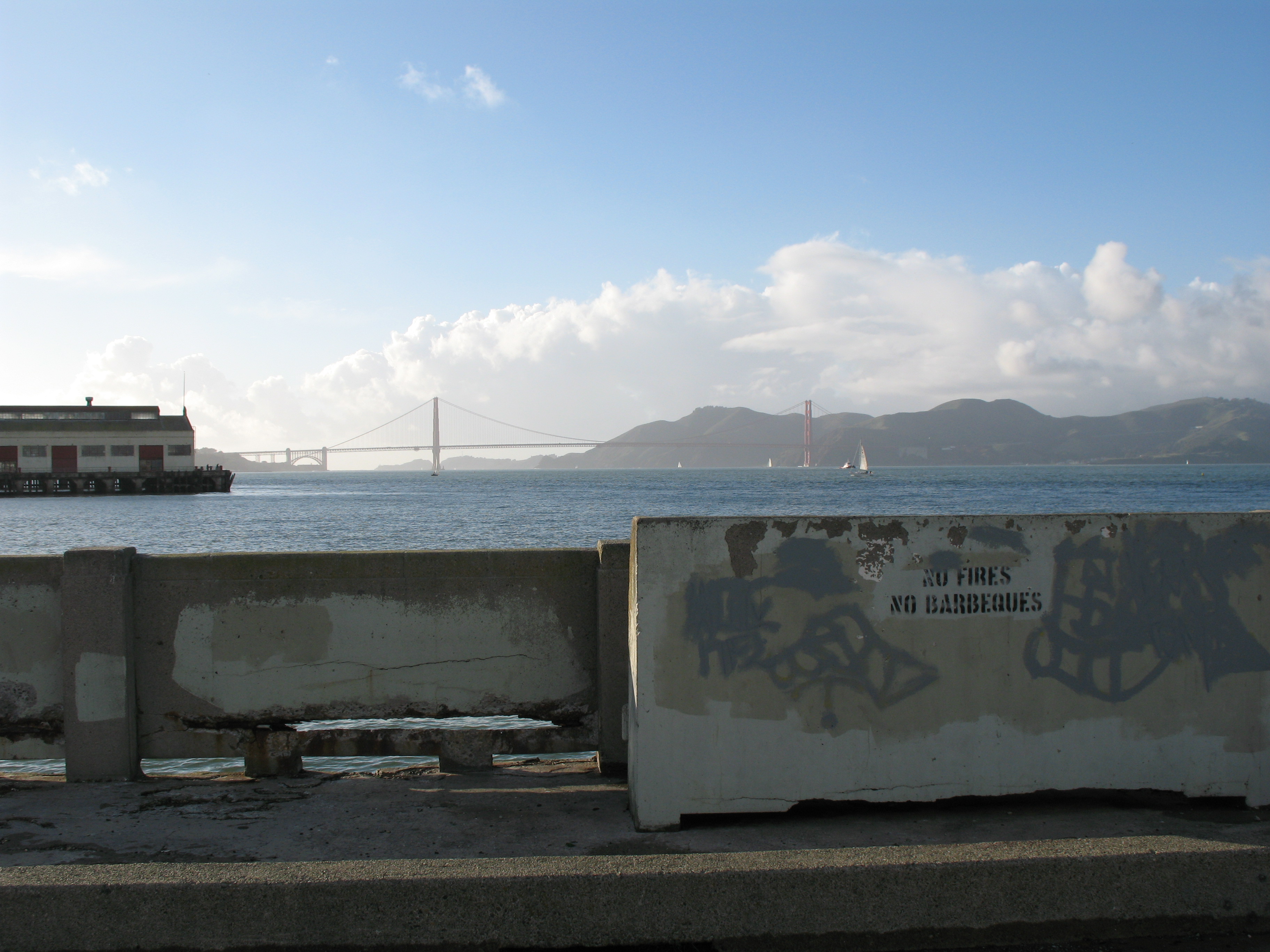
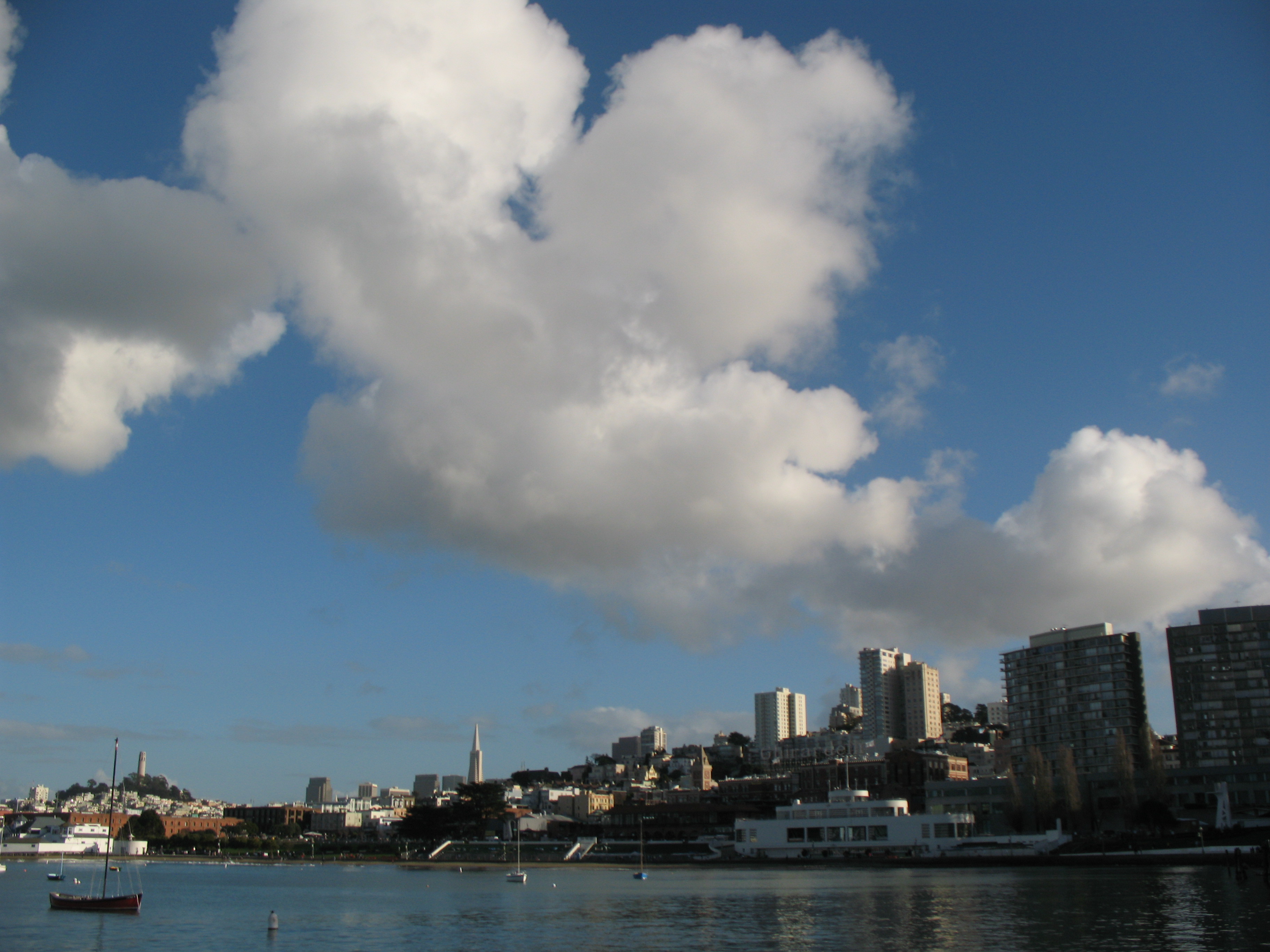
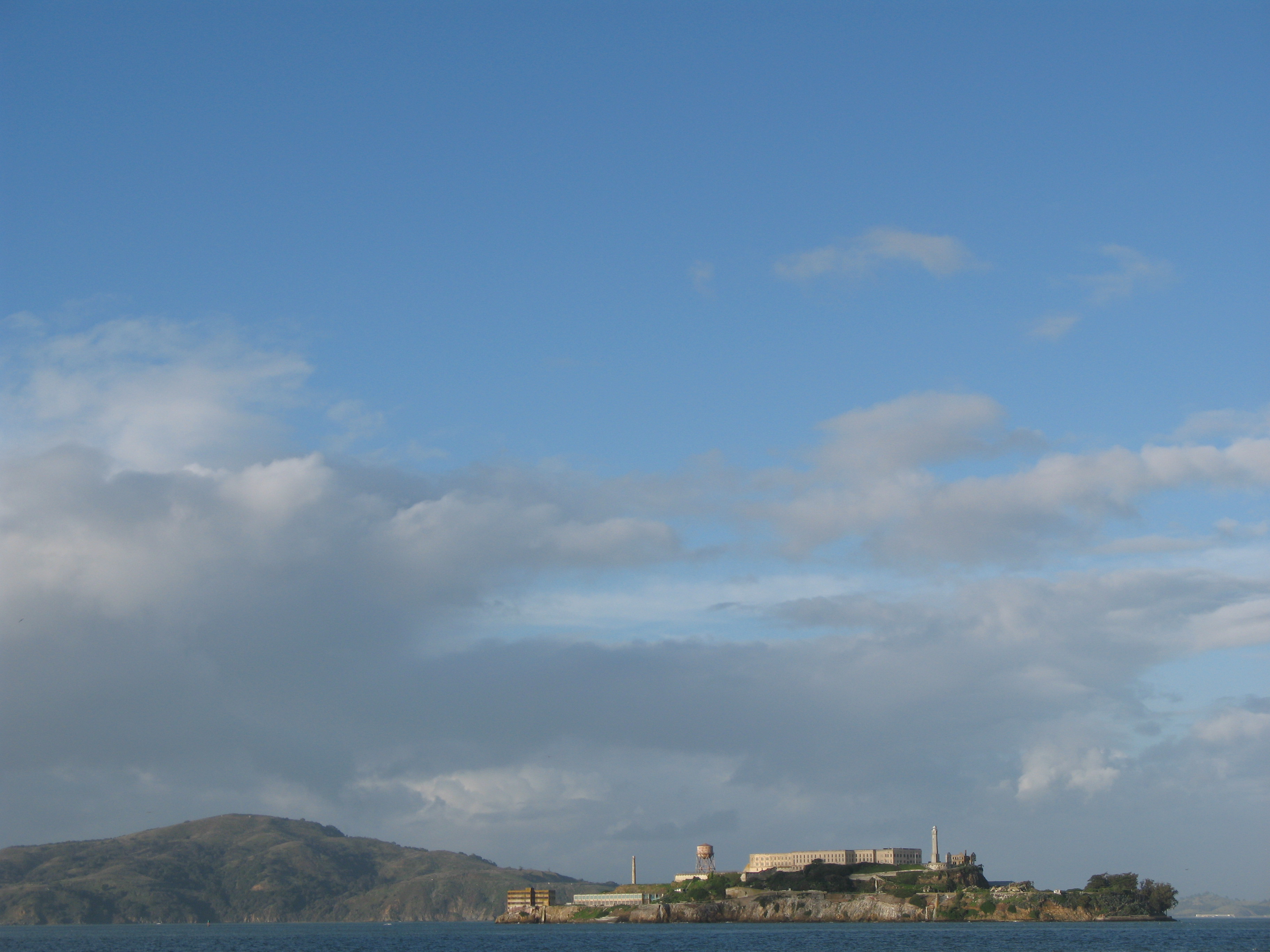
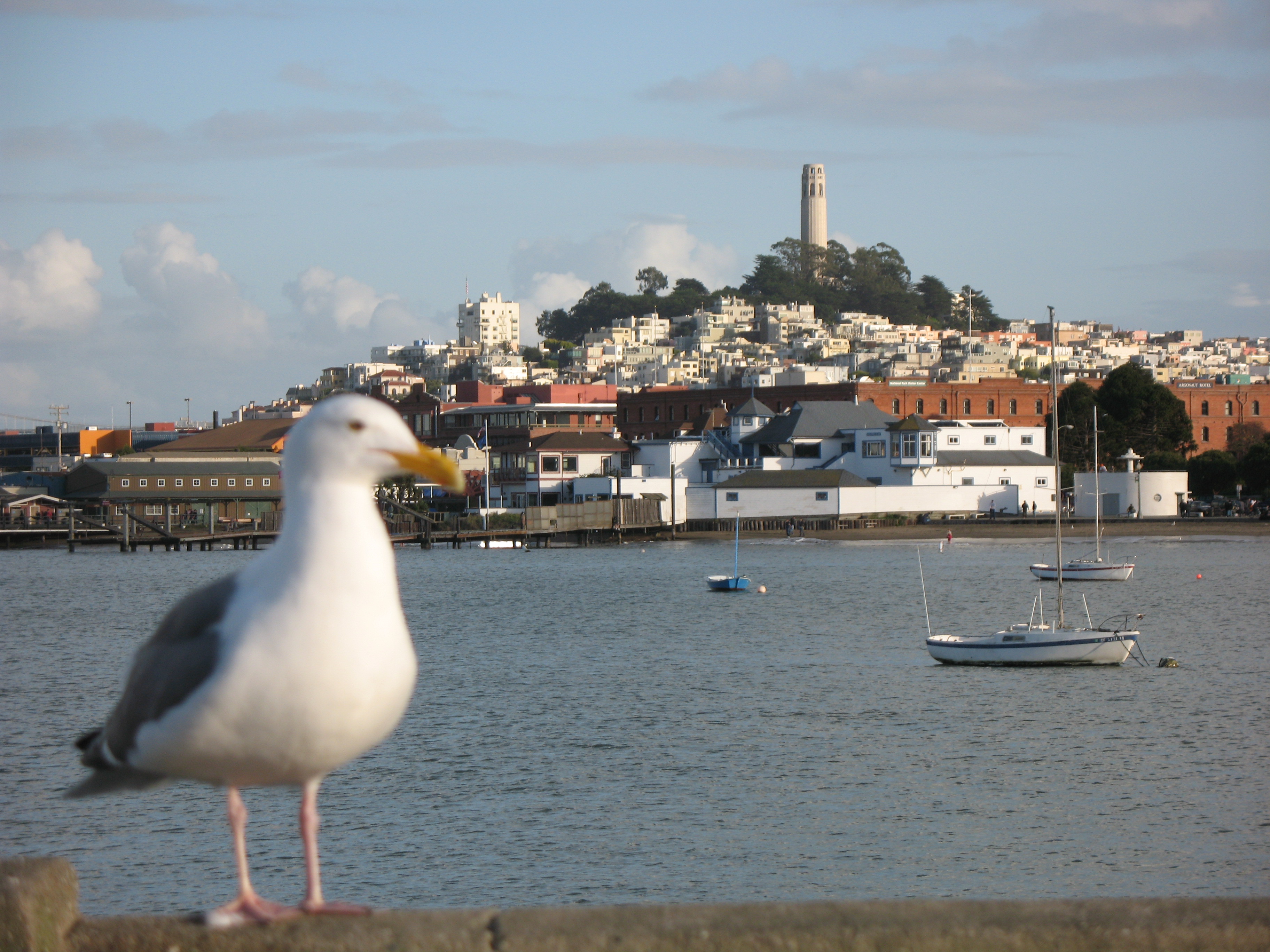
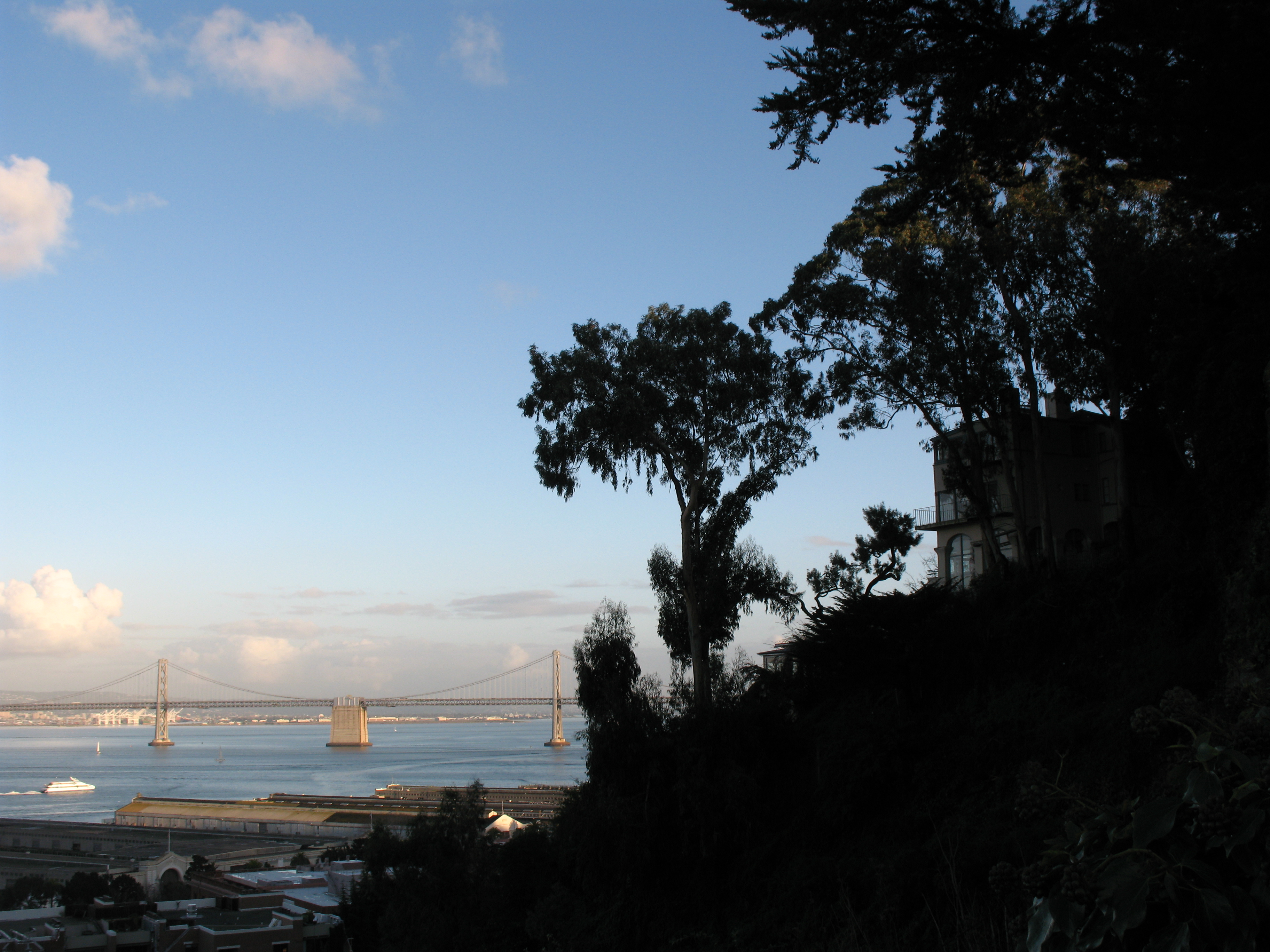
    2. Standing on the breakwater at the end of Van Ness Avenue and having 360 degrees of amazing things to look at.  To the east is the Golden Gate Bridge.  Scanning to the right is Mt. Tamalpais and Sausalito.  Then Angel Island, Alcatraz, the east bay, and Bay Bridge.  Finally a panorama from Coit Tower across the downtown skyline to Ghirardelli Square ending at the bluffs of Fort Mason.  I literally stood on the pier and just turned myself every few minutes, not knowing what to look at.   The only thing breaking my reverie with the surroundings were the occasional couple asking me to take their picture and the sound of a jazz trumpet coming across the water.

    3. The smell of chocolate emanating from Ghirardelli.  Enough said.

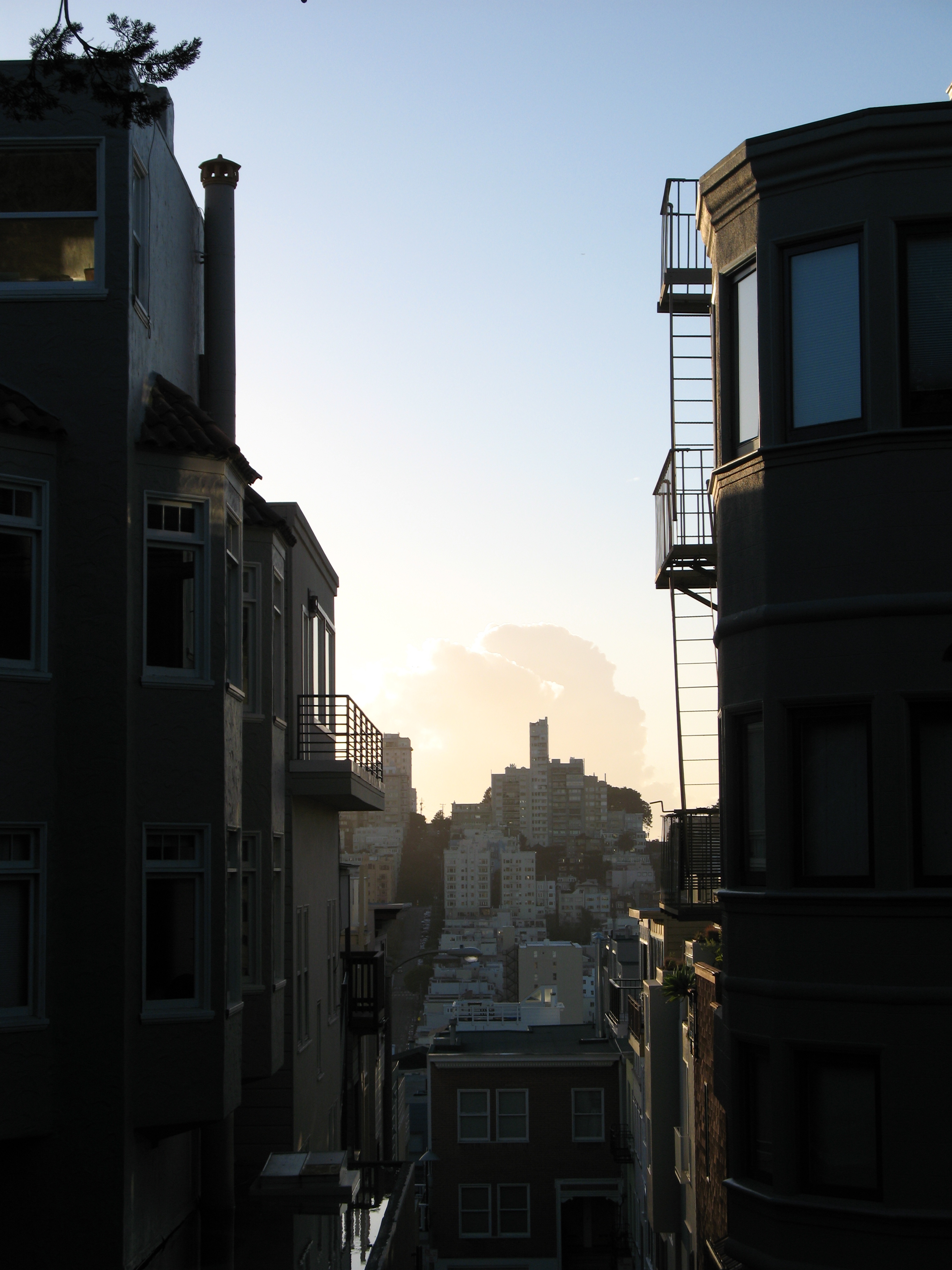
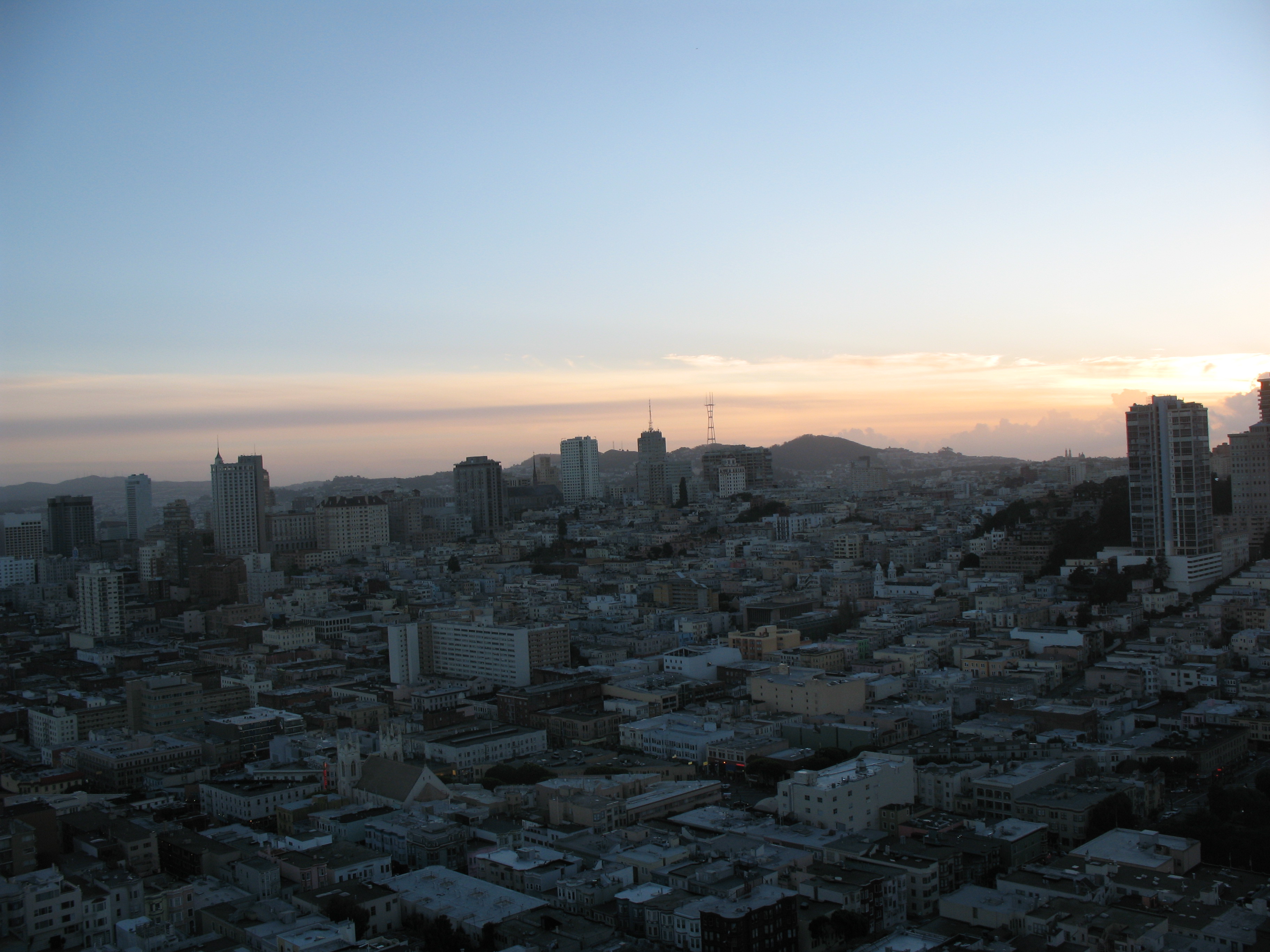
    4. Watching the sunset from Telegraph Hill.  My favorite views of the city’s rich architecture and patchwork colors of neighborhoods.  I always try to look for the parrots, but I’ve never had any luck.  I wonder if they’re still around.

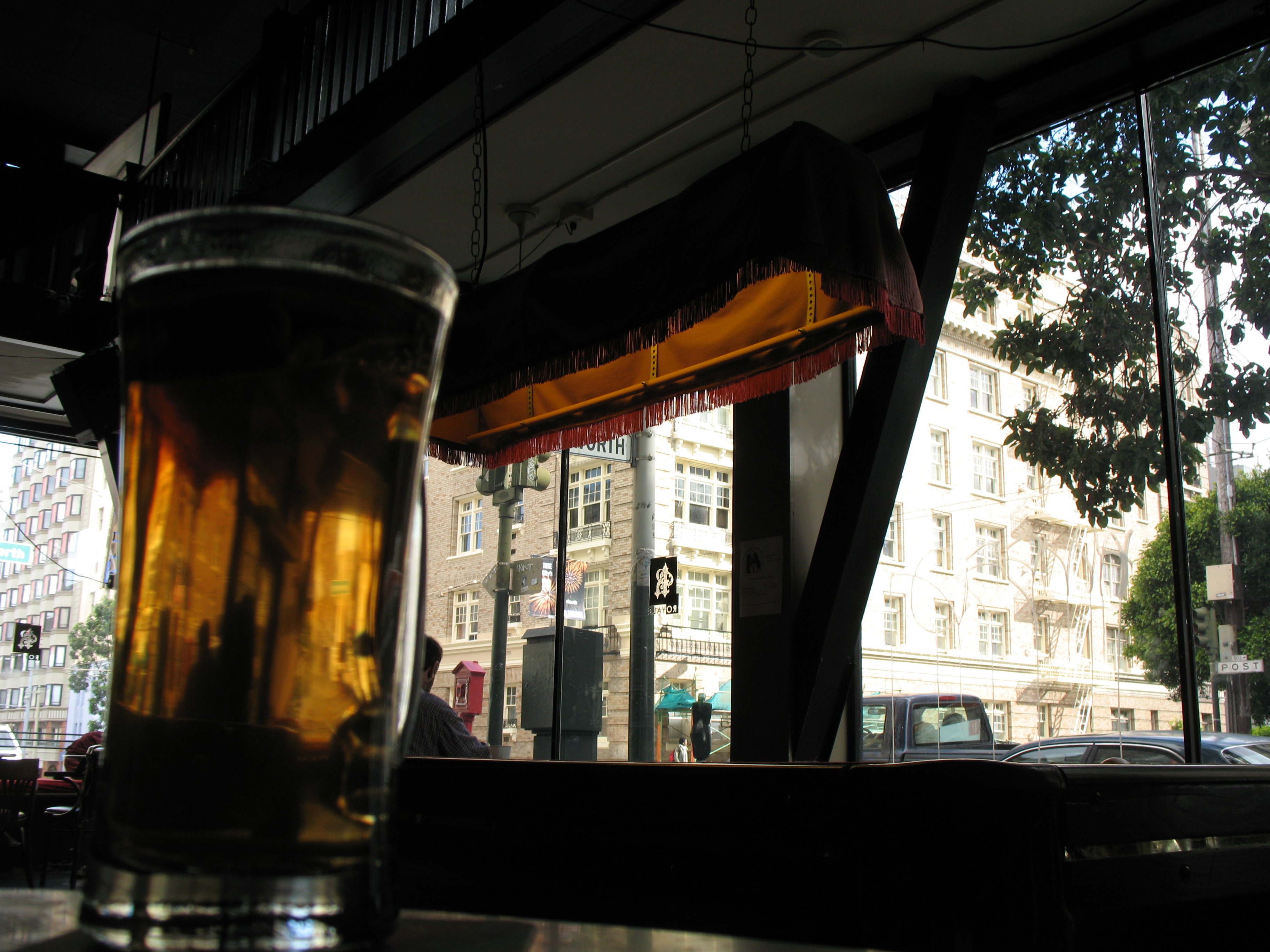
    5. Hunting for (and finding) great vegetarian cuisine.  Today’s winners were a “Clark Kent vegetable sandwich” at Café Royale and seaweed tofu soup and fresh spring rolls at Loving Hut.  If only I lived in a city with real veg restaurants.

  • Finding Geronimo

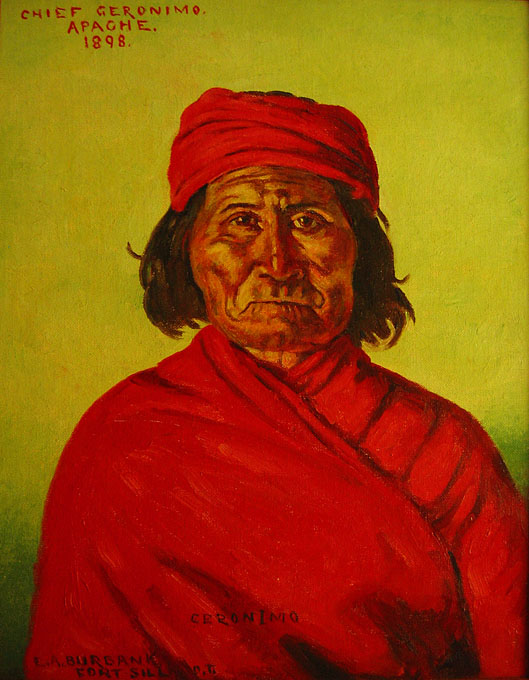
    I think I was about 11 years old when my British and American ex-patriot grandmother took me along to an auction showing near where I lived in Cape Cod, Massachusetts. Since the auction itself was still a day away, the gallery opened up the back rooms for potential buyers to walk through and examine merchandise up close. There were rooms and rooms filled with antique treasures, most of which held no interest to me at that age. But I stumbled across a painting that mesmerized me. It was a portrait of Nde, or Chiricahua Apache Chief Geronimo, painted in 1898, 11 years before his death. The white Americans who don’t remember Geronimo as the last Indian leader to stage an armed uprising against the United States government, do tend to recognize his name as an epithet used when a cartoon character is about to do something stupid. In 1991 I didn’t know a thing about him.

    When I looked at this portrait hanging before my eyes of a man cloaked in red with weather worn skin and an expression that shot to my core, I had a visceral reaction. I spent the better part of the afternoon held captive by the searching gaze of the man in this painting. The next evening, upon returning home from playing at a friend’s house, I saw the portrait hanging on the dining room wall the instant I walked through the door, but I said nothing. I played dumb in front of my dad and grandmother who subtly tried to direct my attention toward it. I think I was afraid I could be dreaming. I finally “noticed” it and cried with delight. The painting was more beautiful than ever, even to my young eyes.

    In 18 years, the painting has never left my side. Today it hangs in my bedroom, surveying me, reminding me of things more important than my own life. In Geronimo’s eyes I see pain and defeat, I see ferocity, compassion, curiosity, and peace. I see warmth. I see the past and the land. Each time I glance at his portrait I sense something new.

    One of the remarkable things about a valuable artifact like a painting is that it has history and I’m as mesmerized by the history of this particular portrait as I am of the work itself. Completed in 1898, it has over a hundred years of history, of which I have only been privy to the last eighteen. While the history of the specific canvas that hangs on my wall remains predominantly a mystery, I have discovered some interesting facts about the painter and his meeting with Geronimo in 1898, the least of which is that the painting I have is one of a handful of portraits of Geronimo – all by E. A. Burbank – ever created from a live sitting.

    Elbridge Ayer Burbank grew up in Illinois during the mid-19th Century, born twenty-five years after the last tribes in the state had been exiled to the West. With youthful and artistic ambition (and a commission from the Field Museum in Chicago), Burbank set off to paint the great Native American figures of the time, capturing their plight from an anthropological perspective. Burbank wrote in his memoir, Burbank Among the Indians,

    Having heard of Geronimo only through the screaming newspaper head-lines which exploited his daring raids and cruel massacres, I was prepared to meet a thoroughly bloodthirsty savage. I gave thanks that I did not have to encounter this crafty Apache at large, but instead could sketch him behind prison bars. Imagine my great surprise upon arriving at Fort Sill to find that Geronimo was not in prison at all but was allowed his freedom. He lived in a house the government had built for him, a one-story affair built around a patio.

    Upon knocking on Geronimo’s door, Burbank was told that the chief was hunting. Burbank’s memoir picks up from here:

    I sat down upon the steps and waited. Presently an elderly Indian came riding up on a horse and dismounted. He was short but well-built and muscular. His keen, shrewd face was deeply furrowed with strong lines. His small black eyes were watery but in them there burned a fierce light. It was a wonderful study, that face so gnarled and furrowed. I studied it as he came over to me. I offered him a cigarette and lighted one myself. We sat there and smoked for a while without saying anything. All this time Geronimo was peering at my face. He knew I had some further object in being there. Finally he asked me to tell him about Chicago.

    Eventually Burbank roused the courage to address Geronimo about sitting for a portrait: “I am an artist. I also came to Fort Sill to paint a picture of Big Chief Geronimo.” Burbank later described:

    I never had a finer sitter than Geronimo, although sometimes he became very nervous while posing. I would give him a few minutes rest until he quieted down. Invariably upon hearing a horse or footsteps, he would rush to the door and see who was coming. He seemed to have a haunting fear of being pursued, even though he was at the time a prisoner. As we worked day after day, my idea of Geronimo, the Apache, changed. I became so attracted to the old Indian that eventually I painted seven portraits of him.

    Before his death in 1909, Geronimo confided that he liked Burbank more than any white man he had ever met.

    Burbank went on to create over 1,200 portraits in 125 tribes. He died in 1949 when he was hit by a cable car in San Francisco.

    Interestingly enough, Burbank wrote in his memoir that he painted seven portraits of Geronimo.  Yet I have found several different paintings – plus my own – that are attributed to Burbank and clearly feature Geronimo.  Perhaps I’m looking at different postings of the same paintings – some have very obvious similarities.  I’ve included links to the other paintings below. As far as I know, mine is the only remaining painting that is not in a museum, while I suspect that there are sketches out there that I have not yet tracked down. Perhaps I’m biased, but I believe mine to be the best. It captures something for me I can’t describe that the others do not.

    This link takes you to five of Burbank’s portraits of Geronimo. Two are housed in the Butler Art Museum in Youngstown, Ohio, two at the Newberry Library, in Chicago, and one at Bibliotheque des Arts Decoratifs, Paris, France. This latter portrait closely resembles mine and judging from some details, it appears both were created during the same sitting.

    Similar to one of the Butler pieces, but with notable differences, is the version at the Smithsonian American Art Museum.  And yet another with the same theme at the Eiteljorg Museum of American Indian and Western Art in Indianapolis.

    At the Hubbell Trading Post in Ganado, New Mexico, is a painting and I’ve also seen a crayon sketch that supposedly is housed there.  And finally, the painting that most mirrors my own. I can’t find where the original is, if it even exists. This copy was the cover page in the now out-of-print edition of Burbank’s autobiography, ”Burbank Among the Indians.”

    What is most fascinating to me is that the story of this painting keeps evolving for me.  Each time I research Burbank and his work I learn more that gives me glimpses into his painting that hangs on my wall.  Surely the story will continue.

  • The Impracticality of Sentimentality

    As I get older I find my sense of sentimentality is growing more refined – what was meaningful to me in the past no longer holds the same meaning and new things become suddenly valuable to me. Part of this, no doubt is due to my wanderlust and the impracticality of hauling accumulated objects from place to place. This spring will mark yet another dwelling to add to my list of dwellings. Its been fourteen years since I have lived in one home for more than two years, a reality that both inspires excitement and fatigue when I stop to reflect upon it. Moving around so much has its benefits or drawbacks, depending upon how one views it. A benefit for me is always that it necessitates getting rid of the layer of useless junk one accumulates after a year or two in one place. It’s a chance to start over and rethink the inane list of the objects I call my possessions.

    My dad and I were recently talking with a family friend who commented on the vast collection of antiques, knick-knacks, and tchotchkes that my dad has accumulated over the years. This was in the context of wanting to simplify our respective lives and the benefits of doing so. My dad moved from years of living in four-bedroom homes to a two-bedroom Cambridge apartment and back into a four-bedroom home. Needless to say, I know he is looking for a smaller place and wants to purge a lot of his possessions, but I learn that this is not as easy as one might imagine. While we all agreed there is an ongoing need to simplify our lives, I asked my dad rather bluntly, “But, could you walk away from all of it?” This had him stumped. I suspect I could “walk away from it all,” but I wonder about the psychological toll of that, especially if it were not optional. Then again, the idea of surrendering my possessions seems liberating in one sense. It takes a lot of resources to maintain – think about the amount of time and money we expend just to procure and secure our possessions. Our homes are not just shelter for us, but rather vaults for the material extensions of our lives.

    This past weekend I spent 60 hours helping dad pack up all his belongings. We started with the ambitious goal of sorting into what to get rid of and what to keep. Despite tossing 34 bags of garbage out the back door, we still managed to pack a lot of stuff that he probably doesn’t need. His possessions have the added complexity of being “valuable,” a layer of commitment to material goods that I gratefully lack. But it makes me wonder how value is determined. Most people in this culture have possessions that are valueless in any reasonable market, yet are still invaluable to their possessors. I would wager that most of these items are not very useful to us in our day-to-day lives, but we keep them around for the sake of sentimentality. As nice as it always is to watch people take the proverbial walk down memory lane as my dad rediscovered the possessions from his life, I found myself desperately clinging to the notion that a simplified life is a good life. When I arrived home after our marathon packing escapade I found myself depressed by even the relatively small amount of stuff I have in my own house.

    This idea of sentimentality in objects is fascinating to me. I have been interested in the phenomenon of attaching sentimental value to places and objects for a long time – in fact, this was born out of my family’s propensity at moving around when I was young. I came to the realization as a teenager that moving away from a place means that you’re leaving behind some of the physical and visual cues that prompt memory. My brain goes into hyper-drive when I return to a place I spent time in as a child, once I reorient myself. But because I haven’t lived in one town for more than six years at any point in my life, this revisiting of memories occurs less frequently than if I had more constant reminders of the past.

    I certainly possess quite a few objects that have sentimental meaning to me. A clay pot I made in second grade that now passes as art. A portrait of Geronimo my grandmother bought me in sixth grade after I fell in love with it at an auction. Various prisms and candle holders that belonged to my other grandmother. A rock painted by my grandfather. My mother’s flute, which has been unused since I was ten years old. This list goes on and on. Then I have things like books. Lots and lots of books. Some have more sentimental value than others. Some I keep because it seems practical to do so. Others I will likely never need again. I went through a phase when I thought having lots of books was a sign of something. I collected them, even if I never read them or had a strong inclination to read them. Perhaps this is a different phenomenon, but I suddenly feel nauseous at the idea of carting all these books around with me as some intellectual status symbol.

    On the other hand, there’s a lot to be said for the raw emotion that sentimentality stirs.  Despite my love of the rational, I also place quite a bit of stock in genuine emotion.  This weekend, in my brother’s absence, I was charged with packing up his sentimental stash.  Initially, I was cynical about the pile of trophies and knick-knacks that were important to him but as I carefully began wrapping and packing each item, there was a stronger and stronger narrative about him as a person that I felt through these items.  One of the last things of his I found was a case to a CD I made for his high school graduation.  The CD was long gone, but he had held onto the case that had photos of the two of us and an inscription.  I was moved to tears that this piece of plastic and poorly printed paper were important enough to him that he would keep it.  Just when I’m ready to call sentimentality a worthless emotion, it bites me in the butt.

    Last week I heard John Lennon’s Imagine while I was driving this morning and the line, “Imagine no possessions,” really struck me for some reason. I think about the idea of ownership a lot in my teaching and personal musings, but rarely envision what it would mean for me to have no possessions. I can’t tell if this is a too-radical approach to the problems of ownership, or if it’s common sense. I do know that in just over a month I’ll be moving into my eighteenth house and I’m not sure what to take with me.

  • Chickening Out

    Each year for the past four years I’ve had a house-sitting gig at the home of a colleague’s parents.  Last year they added taking care of six chickens to the roster of duties, and though I was perhaps hesitant at first, I’ve seriously grown to love these birds and look forward to “sitting.”

    My project for the week suddenly manifested on Sunday night when a wet snow storm accumulated enough to make the net over the chickens’ outdoor enclosure collapse.  Subsequently, the net froze to the ground under an inch and a half of ice.  It’s taken me all week and a combination of shoveling, kicking, scraping, and an elaborate process of pouring hot water on particularly stubborn patches of ice to get the net back up.  I was finally left with the net free from the ground, but with a number of holes in it.  A staple gun and some garbage bag twist-ums solved the problem (at least temporarily) and got the mesh back up over the enclosure so I can leave “the girls” outside without worrying about large birds of prey swooping in and carrying off one of them.

    In a way this fear of one of my feathered friends becoming some eagle-baby’s McNuggets got me interacting with them more than I might have.  Armed with a technique for luring them back into the hen house, I got bold and let them wander around the yard for awhile.  Not all of them took me up on the offer to go scratching around the edge of the driveway, but frankly, the four of them wandering around on their own scared me into “mother mode” enough as it was.  It took a trail of yogurt and grapes (which they love) to corral the troops back into their enclosure, but they came quickly, like properly mannered chickens, when called.

    I marvel at how curious and intelligent the chickens are.  Last year, when I brought my camera into their pen to snap photos of them, they were captivated by this black machine that clicks at them, not unlike the sounds they make amongst themselves.  Whether lost in the visual complexity of the camera lens or mesmerized by their reflection in the glass, I can’t say for sure, but they seemed to want to understand every piece of this odd contraption.  It takes them a few days each year to warm up to my intrusion into their routines, but by mid-week, they cluck with anticipation as they hear my voice approaching the hen house.

    Best of all, these chickens are happy and thus, they lay eggs.  Lots and lots of eggs.  This year there are seven of them and five to six lay each day.  For a solo house-sitter, this means that I spend most of the week figuring out how many ways I can consume an egg.  My favorite is the old standard: scrambled.  I don’t use any milk and just a bit of butter, and the eggs come out lighter and fluffier than any I’ve ever had.  Personally, I suspect the amount of yogurt the girls consume has something to do with this.  Fresh eggs are really astounding.

    In the evenings I’ve been watching the 1970’s British sitcom, “Good Neighbors,” about a suburban couple who give up their white collar jobs and attempt to live off their land.  Naturally, they live next to the stereotype of the posh, conservative, British elite, and the response of the neighbors is where all the hilarity lies.  I confess I’ve had fantasies about building my own chicken coop in the parking lot behind my building.  Not likely to happen, but the idea of fresh eggs keeps the idea alive in my mind.

    Tomorrow I head back home.  I miss my cat, my bed, and yes, my roommate.  For sure, though, a few eggs will be making the journey with me.

  • The Crash

    Note: This happened last August – everything is back in working order.

    Just before I struck the car ahead of me on I-95, I thought to myself, “What the hell, this won’t really happen.”  In the same instant, some other more primitive part of my brain was doing what it needed to do prevent it from happening.  I slammed on the breaks.  It happened.  Like dropping a stick of warm butter on the floor, the front of my car smooshed up.  I don’t even remember it making a noise, just seeing where part of my car had been was now occupied by the back corner of a Subaru Outback.  I sat frozen in my seat for what must have been a few seconds.  That initial part of my brain that thought it won’t was quickly coming to grips that it had.  Happened.

    It seemed like a long eternity that I pondered this odd situation (odd only because it had never happened to me before), but I was briefly plunged into a whole new reality as I suddenly felt the sledgehammer jolt of another car rear-end me.  Without looking in my rearview mirror, I froze, waiting for yet another impact.  It never came.

    Once I returned to the moment, I decided that I should find my phone in the explosion of coins and various bits of small debris that had been already loosely scattered about my car that were now thoroughly dispensed as if shot from a confetti gun.  I found it, dialed 911, and found myself asking the operator to repeat, “What is your emergency?”  What?  The second time through, my brain clicked in and responded appropriately.  Turns out, she knew exactly where I was and asked me if a trooper was pulling up behind me.  For the first time, I looked in my mirror, and sure enough I could see blue lights.  Hanging up the phone, my next thought was the horrific blood and bodily injuries that surely awaited me in the other two cars.  It seemed we all had opened our doors and gotten out on the median at the same time, with no injuries.  It was at this point that I leaned against the guard rail, and let the officer do his thing.

    As I sat there, feeling the hot sun on this otherwise mild day, I pondered two things: physics and rubbernecking.  In that order.

    Surveying the damage to the three vehicles, it struck me (haha) that cars are designed very intentionally.  This didn’t really surprise me, exactly, but I suppose I had never really thought about how a car would behave in a situation such as this.  The Hollywood versions of car crashes really don’t do much justice to physics and design at all.  In order to understand more about the physics, I have to explain a bit more about the crash.

    I was driving in moderate traffic in the far left of three lanes headed northbound.  I missed the specific details of what happened to initially cause the accident, but I remember suddenly realizing that there were two cars attempting to share the lane ahead of me (what I assume happened was the car on the right tried to merge into the left lane not seeing there was already a car there – needless to say, the merging car escaped unscathed and did not stop).  The car on the left swerved over, only to hit the guardrail, which was placed close to the lane itself.  I assume that the experience of contacting the guardrail was enough to make the driver of this car (the Outback) consider that she had “crashed” and thus execute a full stop on the highway.  While I can’t argue this was a bad instinctive move, it had obvious consequences.

    Since the Outback was already on the far left edge of the highway and with a steady stream of cars in the center lane, something in my head decided that it was a far better move to collide with the Outback than to try to swerve around her and risk hitting either the side of her car or a car in the center lane.  I take a lot of pride in doing my best to be aware of cars and space around me while I’m driving, and I assume that aided my decision to stay where I was instead of avoiding the immediate obstacle.

    Initially, when I realized that the Outback had begun a rapid deceleration, I slammed my foot on my break.  This is where the physics bit comes in.  A few things happened that I must note.  The car did not swerve at all, despite the fact that I went from an estimated 65 mph to 0 mph in a matter of a hundred feet or so.  I was conscious of my tires squealing below me, but I felt very much in control of the car.  Perhaps had I attempted to execute a turn to avoid the Outback, it could have meant a very different, and probably more dangerous result.

    The second thing that happened was that the impact of the cars was so easy, meaning that I did not hear any horrible sound, the condition of the front of my car was not drastically altered, there were no bloodcurdling screams, or any other horrifying and emotionally scarring occurrences.  I assume that the impact itself was not as bad as it could have been largely because by the time the two vehicles struck, we were both going approximately the same speed.  I remember from my high school physics class such questions like:

    • If you throw a marble from a car going 60 mph, how fast is it initially going and what is its rate of deceleration?
    • If you’re standing in the aisle of a bus that’s going 60 mph and you jump up in the air, why don’t you splat into the back of the bus as it moves forward underneath you?

    I realized that the crash could have been much more severe had we had different relative speeds.

    The third thing that struck me as curious was that the impact of the third car, which hit me square in the rear, felt much more severe than the impact of my car hitting the Outback.  Was this because of relative speed?  Was it because there were different forces on my body?  Did it have to do with the element of knowing I would hit the Outback versus being surprised when I was subsequently rear-ended?

    Finally, leaning on that guardrail, observing the scene, I noticed that the third car (some type of American gas-guzzling luxury sedan, Pontiac perhaps?) had suffered the most significant damage.  Its entire front end was totaled, while the back of my car suffered only cosmetic scrapes and chipped paint.  Observing the twisted folded metal mass of the front of the third car, I suddenly realized what a “crumple zone” is.  Indeed, the front of my car also had “crumpled” while the rear of the Outback suffered only cosmetic damage.  This gave me a profound appreciation for the concept of intentionally “crumpling” a car, as well as for the herculean strength of a rear bumper.

    It wasn’t until later, when I reached my dad’s place, that the final oddity dawned on me.  He seemed genuinely surprised that my airbag did not go off from either the first or second impacts.  I, too, found it strange, upon reflection, but realized that there is likely a connection between the airbags not deploying and my ability to walk away so easily from this incident.

    On the topic of rubbernecking, a phenomenon that annoys me immensely when I’m stuck in traffic myself, it was illuminating to see how mesmerized people are by the misfortune of others.  Somewhat appropriately, I had just finished listening to the Avenue Q song, “Schadenfreude.”  Of course, for other Northbound travelers who were reduced from three to two lanes suddenly, it made sense that traffic had slowed.  But it was the Southbound drivers who were most remarkable to me.  That they had slowed to nearly the same crawling speed as drivers on my side of the median revealed to me a profound, yet, with all its implications, disturbing insight into human psychology.

    As is usually the case in the rare extreme (or absurd) situations, I intellectualized nearly everything I experienced.  Though some may fault me for this, it allowed me to be level-headed in responding respectfully to the others involved in the incident, even comforting the driver of the Outback who was apologizing profusely for her part.  I spent the remaining hours of the day replaying the accident in my head over and over, marveling, wincing, second-guessing, and feeling grateful, sometimes all at once.

    This past spring, a student from the school where I work took the turn out of the school driveway too sharply and hit a telephone pole.  I was the first on the scene and walked him through the steps he needed to take.  I remarked later to other adults that it was the “perfect accident” – he wasn’t injured and no one else was involved in the accident and he was around adults whom he knew and who could help him.  Considering that so many highway car accidents I see involve stretchers, fire trucks, overturned cars, and mangled guardrails, I suppose as far as everything is concerned, this was a “pretty good” accident.

Something went wrong. Please refresh the page and/or try again.